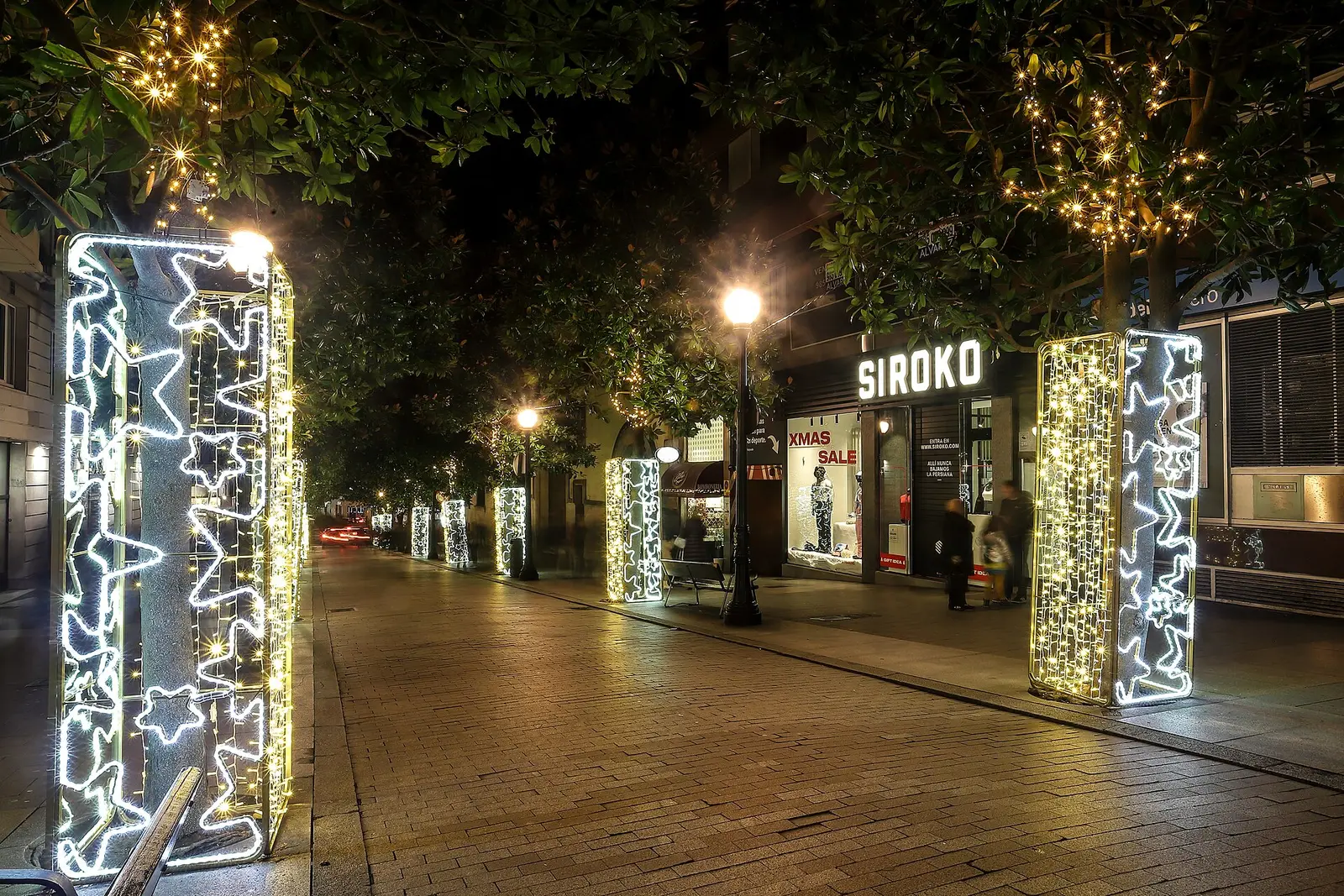
Christmas in Gijón is about atmosphere rather than spectacle: lights strung across the centre, winter waves crashing against the seafront, cider houses buzzing and a city that heads out whatever the weather. Here is how to make the most of the festive season, and what a visitor from abroad should know about how Spain celebrates it.
Important: the city council publishes its Christmas programme every year (the last edition, 2025/26, was branded “Brillante Navidad”). We have not yet been able to confirm the 2026 dates from official sources, so check gijon.es before you book.
How Christmas works in Spain
A few things surprise visitors. The big family meal is usually dinner on Christmas Eve (Nochebuena), not lunch on the 25th. On New Year’s Eve (Nochevieja) Spaniards eat twelve grapes on the twelve chimes of midnight. And the season does not end on 1 January: the real highlight for children is Three Kings Day (6 January), when the Wise Men, not Father Christmas, traditionally bring the presents. The night before, every town holds a parade.
The Christmas lights
The lights usually go on in late November in a ceremony in the city centre and stay up until after Three Kings Day. A festive stroll naturally follows the main shopping streets:
- Calle Corrida and around: the busiest pedestrian shopping street in the centre.
- Paseo de Begoña: the city’s grand central boulevard, lively on holiday evenings.
- Plaza Mayor and the marina: with the lights reflected in the harbour water.
- Cimavilla: quieter, perfect for ending with something warm or a glass of cider.
Tip: go out as dusk falls. In December it gets dark very early, so by around 6 pm the centre is lit up and the streets are still full of life.
Christmas market and shopping
In recent years Gijón has had a Christmas market of wooden stalls in the centre, with crafts, gifts, sweets and food. Its location has changed between editions, so check where it is this year in the council’s programme.
On top of that, the Craft and Organic Market (Mercado Artesano y Ecológico) fills the Plaza Mayor on the second weekend of every month, and in December it is a good place for local gifts. For festive shopping in general (cider, Asturian cheeses, tinned seafood, crafts), read our guide to shopping in Gijón.
Very local gifts: a box of natural cider, cheeses with protected designation of origin, Cantabrian tinned fish, a bottle of ice cider or traditional sweets. Ideas in Asturian desserts.
The Three Kings parade
The Cabalgata de Reyes takes place, as across Spain, on the evening of 5 January. In Gijón the Kings’ arrival usually features the sea, around the harbour, before the parade through the centre, with floats and sweets thrown to the crowd. The exact route and times are published in the council’s programme; arrive early, because the pavements fill up.
Tip: with small children, pick a spot away from the start of the route. It is usually less crowded and you still see the whole parade.
Things to do in Gijón at Christmas
Walk by the winter sea
The San Lorenzo promenade shows another face in winter: storms, waves leaping the wall at high tide and a lovely low light. Climb Santa Catalina hill too, to see the Elogio del Horizonte against a wild sea. In rough weather, follow any warnings and keep away from the edge.
Museums and indoor culture
On rainy days, the municipal museums are your friends: the Roman baths of Campo Valdés, the Asturias Railway Museum or the Museum of the Asturian People. Opening hours change on public holidays, so check gijon.es. The Teatro Jovellanos usually programmes family shows and concerts at this time of year.
More ideas in rainy day in Gijón.
Eating and drinking
December is peak season for cider houses and restaurants, with office parties and family get-togethers. Book for weekends and, above all, for Christmas Eve, Christmas Day, New Year’s Eve and New Year’s Day, when many places close or serve set menus only. To know what to order, see what to eat in Gijón and our cider guide.
With children
Besides the parade, the school holidays usually bring workshops, storytelling and activities at municipal centres and museums. The aquarium and the Railway Museum are safe bets. More in Gijón with kids.
Practical tips for Christmas
- Accommodation: the early-December bank holidays and New Year’s Eve draw visitors; book early. Areas in where to stay.
- Weather: mild for the season but damp and windy. A waterproof jacket beats an umbrella. See weather and best time to visit.
- Transport: city buses run reduced timetables on public holidays; check EMTUSA.
- Shops: almost everything closes on 25 December and 1 January, and many shops close early on the 24th and 31st.
Staying beyond Three Kings? See Gijón in winter and the festivals calendar, where Antroxu (carnival) is the next big date.
Frequently asked questions
When are the Christmas lights switched on in Gijón?
The Christmas lights are usually switched on in late November and stay up until after Three Kings Day on 6 January. The city council announces this year's exact date on gijon.es when it presents the Christmas programme.
Is there a Christmas market in Gijón?
In recent years the city has held a Christmas market in the centre, with stalls selling crafts, gifts and food. Its location and dates change from one year to the next, so check the council's programme.
When is the Three Kings parade in Gijón?
As everywhere in Spain, the Cabalgata de Reyes takes place on the evening of 5 January. The route and times are published in the council's Christmas programme each year.
Is Gijón cold at Christmas?
Thanks to the sea, Gijón is mild for the time of year, but rain is common and the wind makes it feel colder. Pack a warm coat, a waterproof and comfortable shoes.
Are cider houses and restaurants open over Christmas?
Most stay open through the holidays, but many close or change their hours on 24, 25 and 31 December and 1 January. Book ahead for those dates.
Sources
- Gijón City Council – Brillante Navidad programme 2025/26 (previous edition) — 28 October 2026
- Gijón City Council – Museum network — 28 October 2026
- EMTUSA – Gijón city buses — 28 October 2026