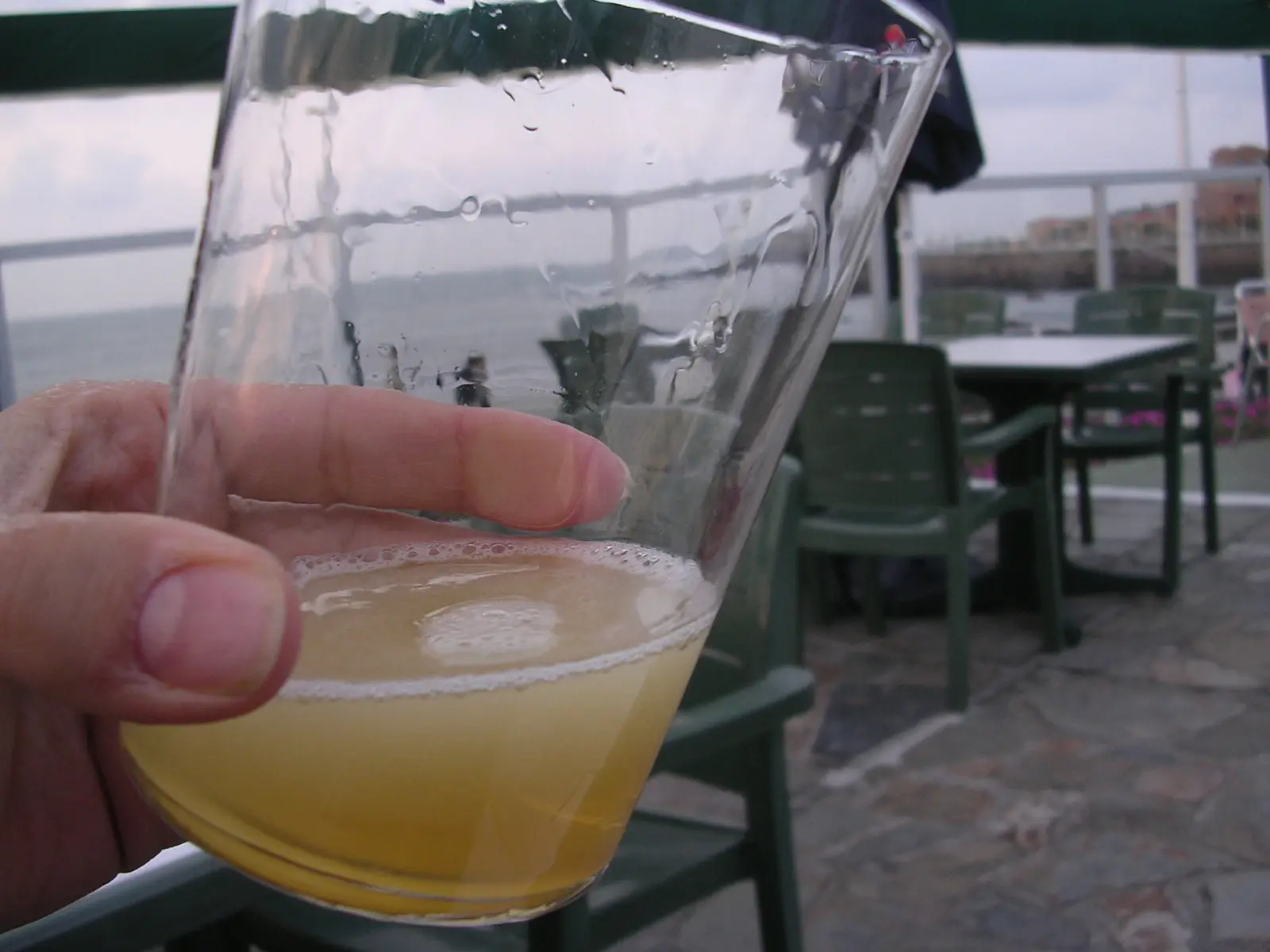
In Gijón, cider isn’t just a drink – it’s how people meet up, celebrate and while away an afternoon. It is served in a very particular way, known as escanciado, and comes with its own unwritten rules. Read this and you’ll walk into any cider house knowing what to order, how to drink and what not to do.
What Asturian natural cider is
Asturian natural cider (sidra natural) is fermented apple juice: unfiltered, barely sparkling, tart, dry and slightly cloudy. It is nothing like the sweet, fizzy pub cider many visitors know. It’s made in llagares (cider presses) from local apple varieties, and there is a Protected Designation of Origin, Sidra de Asturias, guaranteeing it’s made from Asturian apples.
In December 2024 UNESCO added Asturian cider culture to its Representative List of the Intangible Cultural Heritage of Humanity. The recognition covers far more than the drink: the apple orchards (pumaradas), the presses, the pouring and the social ritual of sharing it.
You’ll see three main kinds on menus:
- Sidra natural – the traditional, poured cider you drink in a sidrería.
- Sidra de nueva expresión – filtered, clearer and fruitier, served chilled in a wine glass without pouring. A good starting point if natural cider tastes too sharp.
- Sidra espumosa – sparkling, made like a sparkling wine, for toasting.
Why it’s poured from a height
The waiter holds the bottle above their head at arm’s length and lets a thin stream fall onto the rim of a wide, thin glass held at waist height. Hitting the glass aerates the cider and makes it “break”: it releases gas and froths up. That fleeting moment, the espalme, is when it tastes best.
The amount poured is a culín – barely a couple of fingers. It isn’t meanness: cider goes flat within seconds, so it’s served little and often.
How to drink it like a local
- Drink it as soon as it’s poured, in one or two gulps. Leaving it on the table wastes it.
- Leave a drop at the bottom and flick it out with a twist of the wrist onto the floor or into the trough or bucket by the bar. It rinses the rim where you drank.
- Hand the glass back to the waiter or whoever is pouring. Traditionally a group shares one glass, passed round in turn; nowadays many cider houses give everyone their own.
- Order by the bottle. Natural cider is ordered by the bottle for the whole table, not by the glass. When it’s finished, you order another.
Tip: don’t start pouring yourself without asking. Some cider houses have automatic pourers on the table or bar so you can serve yourself easily.
How a cider house works
A sidrería is part bar, part restaurant. Expect a long bar – often with a floor designed for spilt cider – and a dining room where food comes as sharing plates (raciones). Typical orders:
- To nibble: chorizo cooked in cider, tortos (fried maize pancakes), Asturian cheeses, fried squid, croquetas or fried monkfish (pixín).
- Mains: fabada, cachopo, hake in cider, grilled fish, grilled meat and, in season, shellfish.
- Pudding: rice pudding or cheesecake – see our Asturian desserts guide for more.
A few cultural notes: cider houses get lively and loud, especially at weekends; lunch runs from about 1.30pm and dinner rarely starts before 9pm; and tipping isn’t expected, though rounding up is appreciated.
Cider houses cluster in Cimavilla, the city centre and La Arena, but every neighbourhood has some. Our guide to where to eat in Gijón explains the feel of each area, and what to eat in Gijón covers the rest of Asturian cooking.
Cider presses and espichas
Llagares are where cider is made. Several – in Gijón’s rural parishes and in the nearby “cider region” around Villaviciosa, Nava and Sariego – welcome visitors or work as restaurants. The classic celebration is the espicha: the barrel is tapped (espichar) and cider is drunk straight from it, with standing-up food such as tortilla, chorizo, empanada (pie), bollos preñaos (bread rolls baked with chorizo inside) and cheese. It’s a popular format for group and work celebrations.
Tip: new cider season is spring, when the presses open the barrels from the latest harvest – a great time for an espicha.
Cider festivals in Gijón
Every summer Gijón holds its Natural Cider Festival, with tastings, competitions and the famous cider-pouring world record, when thousands of people pour cider at the same time on the beach. Check this year’s dates on the festival page or the city council website, gijon.es.
Drink sensibly – and get home safely
Natural cider tastes light but is roughly as strong as beer, and the culines come thick and fast. Eat as you drink, have some water and leave the car behind on a night out: see getting around Gijón for buses and taxis.
Frequently asked questions
How do you drink Asturian cider?
You're served a culín – just a couple of fingers of cider poured from a height. Drink it straight away in one or two gulps while it's still lively, leaving a little at the bottom to flick out and clean the rim of the glass.
Do I have to pour the cider myself?
No. In a cider house the staff do the pouring. If you'd like to try, ask first and practise with a small amount over a spot where spills don't matter – it's harder than it looks.
Why is the glass only filled a little?
Natural cider loses its sparkle within seconds of being poured, so it's served little and often. Filling the glass would leave you with flat cider.
What is the difference between natural cider and 'nueva expresión' cider?
Natural cider is unfiltered, almost still and poured from a height. Nueva expresión cider is filtered and clearer, served chilled in a wine glass, and doesn't need pouring.
What is an espicha?
A party at a cider press (llagar) where cider is drunk straight from the barrel and food such as tortilla, chorizo, pies and chorizo-filled bread rolls is eaten standing up.
Sources
- Spanish Ministry of Foreign Affairs – UNESCO inscribes Asturian cider culture as Intangible Cultural Heritage — 28 October 2026
- Turismo Asturias – Gastronomy — 28 October 2026