At a glance
- Access
- Numbered stairways from the promenade; the Escalerona is number 4
- Lifeguards
- 1 May to 15 October
- Tides
- At high tide the water almost reaches the promenade: check the tide before going down
- Dogs
- Off-season only, between stairways 2 and 8; follow the signs
- Facilities
- Showers, foot taps, toilets and sunbed hire
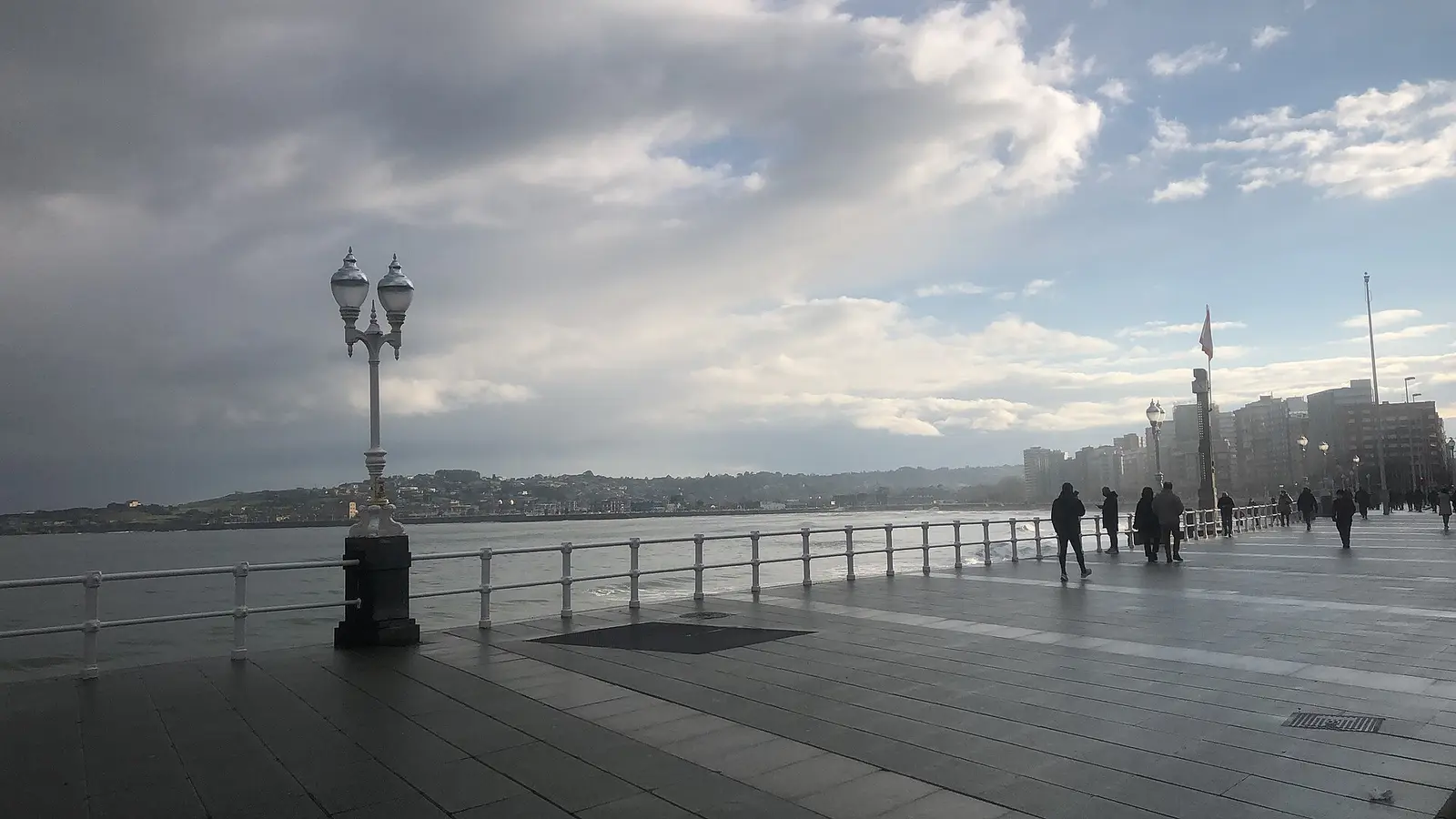
San Lorenzo is Gijón’s living room: a curve of golden sand about a kilometre and a half long, open to the Cantabrian Sea (the southern Bay of Biscay), with a promenade running its full length. In summer it’s a swimming-and-towel beach; the rest of the year it’s for walks, surfing and sunsets. What really defines it, though, is the tide, which changes its appearance completely several times a day.
What the beach is like
San Lorenzo runs from the church of San Pedro, below the old quarter of Cimavilla, to the mouth of the river Piles at the eastern end. Beyond the last stairs there’s a rocky stretch and then the small beach of El Rinconín. It’s a city beach of fine sand, with moderate to strong waves and open-sea exposure.
Access points are numbered stairs leading down from the promenade, and that’s how everyone in Gijón finds their way: “meet you at 4”, “we’re opposite 9”. The most famous is La Escalerona (stair 4), a grand 1933 staircase crowned by a pillar with the city flag.
Tides: check the table before you go down
The difference between high and low tide is so great that the area of sand goes from around 40,000 m² to around 240,000 m², according to figures compiled on Wikipedia. In practice:
- At high tide the water reaches almost to the wall, the beach shrinks to a narrow strip and waves break near the stairs. Not the moment to lay your towel at the bottom.
- At low tide a huge expanse of firm sand appears, perfect for walking, running or ball games.
- Two tides a day: high and low water follow each other roughly every six hours and get later each day. Check a tide table before you plan.
Tip: locals head down as the tide is going out. That way they have hours of ever-growing beach ahead of them instead of watching the sea swallow their spot.
Where to swim
The calmest bathing is usually around La Escalerona. The central stretch (stairs 7–8) and the river mouth are considered more dangerous because of currents, sandbanks and sudden changes in depth. Always follow the lifeguards’ flag (green: safe; yellow: take care; red: no swimming) and stay inside the marked bathing area.
Be warned: the water is cold if you’re used to southern Europe, even in August. With small children, sheltered Poniente beach may be a better bet.
Facilities and accessibility
According to Turismo Asturias, the beach has showers, foot-washing taps and drinking fountains, toilets, sunlounger hire and a lifeguard service in season, which according to its listing runs from 1 May to 15 October: weekends and public holidays only until 21 May (11:30–19:00), daily 22–31 May (11:30–19:00), 10:00–21:00 from 1 June to 31 August, 10:00–20:00 from 1 to 15 September and 11:30–19:00 from 16 September to 15 October. It’s a smoke-free beach. For people with reduced mobility there’s reserved parking, ramps and adapted toilets. Check this year’s dates and hours on gijon.es.
During the bathing season the City Council regulates what is allowed on the sand and in the marked swimming area; check the current rules on the council’s website.
Surfing and sport
Outside the bathing area, San Lorenzo is Gijón’s go-to city surf beach. At low tide there are often football games on the sand.
Dogs
Dogs are not allowed on San Lorenzo during the bathing season. Official sources differ on when the dog period starts (the City Council says 1 October to 30 April; Turismo Asturias’s beach page says 15 October to 30 April), so in early October check the signs at the stairs. Outside the season they may go on the sand, but only between stairs 2 and 8. On the promenades near the entrances, Turismo Asturias specifies a fixed lead of one metre at most (and a muzzle if the animal needs one). If you’re travelling with a dog in summer, head for El Rinconín at the far end of the beach.
A bit of history
In the late 19th century the beach had sea-bathing establishments, the last of which closed in 1936. The promenade wall was built in the early decades of the 20th century and changed the city’s relationship with the sea for good. A curious detail: in 1986 the coal carrier Castillo de Salas sank off the coast, and you can still find tiny black grains of coal in the sand today.
What to combine nearby
- Walk the San Lorenzo promenade to El Rinconín and carry on along the coastal path.
- Visit the Roman Baths of Campo Valdés, right at the western end of the beach.
- Climb through Cimavilla to the Elogio del Horizonte.
- Cross the Piles and relax in Isabel la Católica Park.
- In winter, watch the sun go down over the bay — our favourite spots are in best sunsets in Gijón.
For the rest of the area’s beaches, go back to our guide to Gijón’s beaches.
Frequently asked questions
How long is San Lorenzo Beach?
About a kilometre and a half of sand, from the church of San Pedro to the mouth of the river Piles. The promenade alongside it is a little longer.
What is La Escalerona?
The grand staircase down to the beach, opened in 1933 and topped by a pillar flying Gijón's flag. It's stair number 4 and the best-known meeting point on the promenade.
Can you swim at San Lorenzo at high tide?
Yes, but the beach becomes very narrow and the waves break close to the wall. There's far more room at low tide. The central stretch and the river mouth are the trickiest areas because of currents.
Are dogs allowed on San Lorenzo Beach?
Only outside the bathing season and only between stairs 2 and 8. The City Council gives 1 October to 30 April, while Turismo Asturias's beach page says 15 October to 30 April – in early October, follow the signs at the stairs. You can take your dog to El Rinconín, at the eastern end, all year round.
Can you surf at San Lorenzo?
Yes, it's Gijón's main city surf beach, but during the bathing season respect the marked swimming area and the lifeguards' instructions.
Sources
- Turismo Asturias – Playa de San Lorenzo — 29 October 2026
- Turismo Asturias – A day in Gijón with your dog — 29 October 2026
- Gijón City Council – Recreational areas for pets: parks and beaches — 29 October 2026
- Wikipedia – Playa de San Lorenzo (Gijón) — 29 October 2026