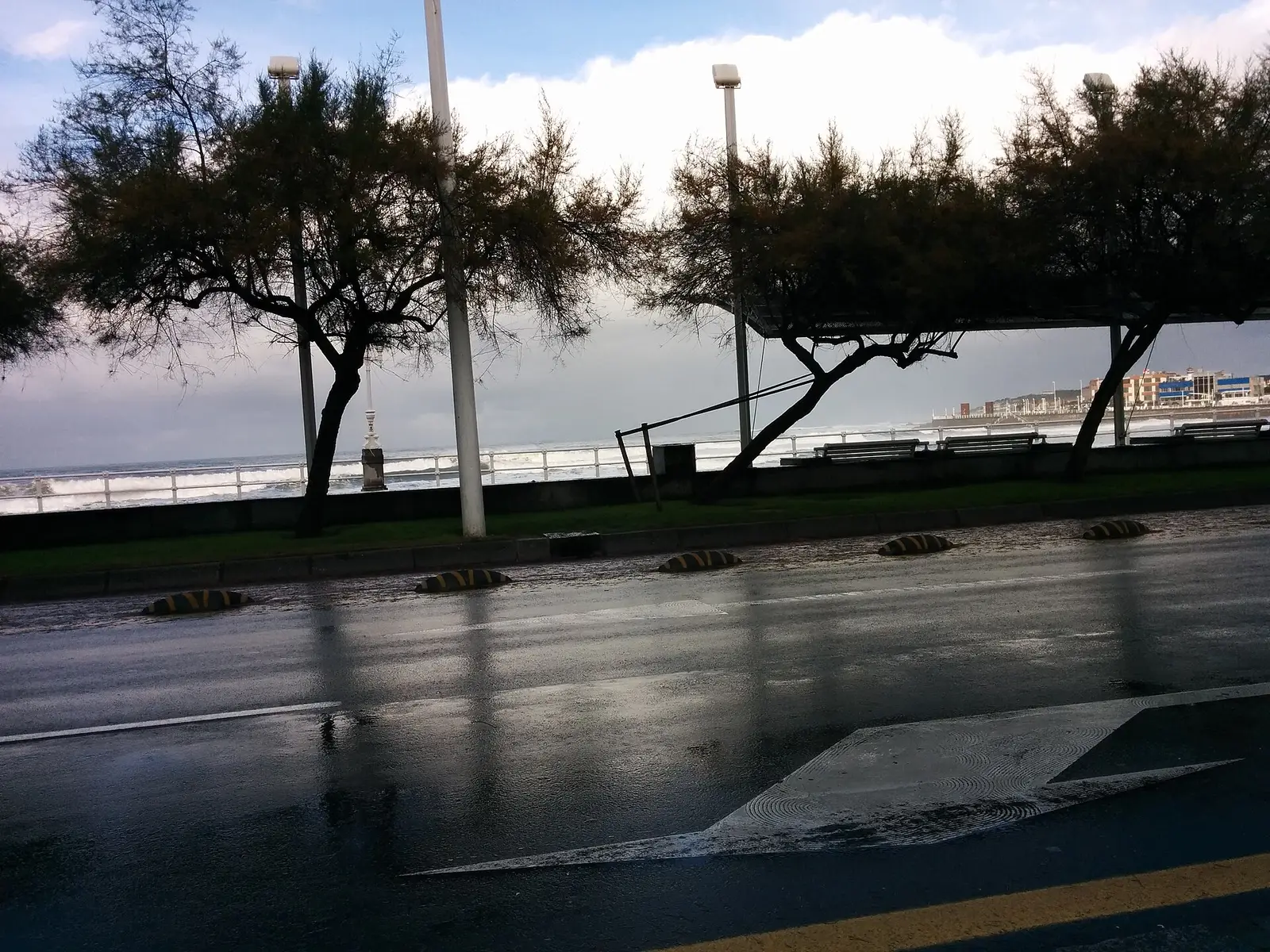
Few cities of Gijón’s size can offer what it does: three sandy beaches you can walk to from the centre and, just a few kilometres east, a wild stretch of coves and cliffs that feels a world away. This guide covers every beach in the municipality, what each one is like and how to choose depending on the tide, the season and who you’re travelling with.
The three city beaches
All three are linked by the seafront promenade and separated by the Cimavilla headland and the marina. In season they have lifeguards, showers, toilets and accessible entrances, and Turismo Asturias lists them as smoke-free beaches.
- San Lorenzo. The city’s big beach: over a kilometre and a half of golden sand beneath the San Lorenzo promenade, known locally as el Muro (the Wall). It faces the open sea, with moderate to strong waves and a dramatic difference between high and low tide. It’s the place for strolling, surfing outside the bathing zone and winter sunsets.
- Poniente. A man-made beach, created in the mid-1990s on the site of old shipyards. Sheltered by the harbour, with gentle waves and the best accessibility in the city. The Aquarium and the Railway Museum are right beside it.
- El Arbeyal. The westernmost, a shell-shaped bay restored for bathing. A neighbourhood feel (La Calzada and El Natahoyo), calm water and fewer people than the other two.
The wild beaches to the east
Across the river Piles, the coast of Somió and Cabueñes is much wilder. There’s no promenade here: you reach the coves by car along local roads or on foot along the coastal path from El Rinconín, which runs for just over nine kilometres to La Ñora, according to Turismo Asturias.
- El Rinconín (El Cervigón). A small beach of pebbles and dark sand right at the eastern end of San Lorenzo, next to the park with the Madre del Emigrante (Emigrant’s Mother) sculpture. It is Gijón’s dog beach (see below) and the starting point of the coastal path to La Ñora.
- Peñarrubia. Around 500 metres of shingle and fine sand below cliffs, with no promenade. Because of the way it faces, it’s in shade in the morning, so it’s best from midday onwards. It’s Gijón’s best-known naturist beach. You walk down steps from a small car park, and access is closed when there are rockfalls.
- Serín and La Cagonera. Two neighbouring coves about five kilometres from the city, awkward to reach on foot, with little sand and a rocky seabed. La Cagonera was once a shelter for fishing boats and isn’t recommended for swimming.
- Estaño. A shell-shaped cove protected as a Site of Community Importance under EU nature rules. A large rock splits it in two and becomes a little island at high tide. Rocks underwater and often strong waves: swim with care. There’s a small car park.
- La Ñora. At the end of the coastal path, where a stream marks the boundary between Gijón and Villaviciosa. A small golden cove between cliffs.
Tip: the eastern coves have very little parking and fill up early on sunny days in July and August. If you’re driving, arrive before 11am, or park near El Rinconín and walk along the path.
Tides: the key to Gijón’s beaches
If you’re used to the Mediterranean, the tides here will surprise you. The sea rises and falls twice a day and the difference is several metres. At San Lorenzo, that means going from around 40,000 m² of sand at high tide to roughly 240,000 m² at low tide: at high tide the water almost reaches the wall and you need to put your towel high up; at low tide you get vast stretches of firm sand to walk on.
- For sunbathing and space: go in the hours around low tide.
- For calmer swimming: Poniente and El Arbeyal, sheltered by the harbour, are less affected by rough seas.
- For the eastern coves: some almost disappear at high tide. Always check a tide table (Spain’s state ports authority, Puertos del Estado, publishes them, as do most weather apps) before you set off.
Bathing season and safety
According to Turismo Asturias, lifeguard cover at San Lorenzo, Poniente and El Arbeyal runs from 1 May to 15 October: weekends and public holidays only until 21 May, then daily, and from 1 June to 15 September longer hours at San Lorenzo (10:00–21:00) than at Poniente and El Arbeyal (12:00–20:00). Dates can change every year, so check the current season on the Gijón City Council website. Always obey the flags: green means safe to swim, yellow means take care and red means no swimming.
During the bathing season the City Council regulates what is allowed on the sand and inside the marked bathing area (games, boards and boats, among other things); check the current rules on gijon.es.
The Cantabrian Sea is cool even in August — refreshing rather than tropical. For what to expect month by month, see our guide to the weather and best time to visit.
Accessibility
Poniente is the best-equipped beach: reserved parking, step-free access, walkways down to the water, adapted toilets and changing rooms, amphibious wheelchairs, a transfer hoist, flotation aids and Braille information. San Lorenzo and El Arbeyal have ramps, adapted toilets and reserved parking. The eastern coves, with steps and steep paths, are not accessible.
Beaches and dogs
According to the official information from Turismo Asturias and the City Council:
- El Rinconín is the only beach in Gijón where dogs are allowed all year round.
- San Lorenzo allows dogs outside the bathing season, only on the stretch between stairs 2 and 8. The start date differs by source: the City Council gives 1 October to 30 April, while Turismo Asturias’s beach page gives 15 October to 30 April and bans animals from 1 May to 15 October. In early October, follow the signs.
- Poniente and El Arbeyal don’t allow animals at any time of year.
On the promenades near the San Lorenzo entrances, Turismo Asturias specifies a fixed lead of one metre at most. The city’s animal bylaw has recently been under review, so check gijon.es that these rules still apply.
Which beach should you choose?
| If you want… | Go to… |
|---|---|
| A promenade, atmosphere and space | San Lorenzo |
| Toddlers and calm water | Poniente or El Arbeyal |
| Accessibility | Poniente |
| To bring your dog | El Rinconín |
| Nature and fewer people | Peñarrubia, Estaño or La Ñora |
| Surfing | San Lorenzo outside the bathing zone, El Rinconín |
Getting there and parking
The city beaches are a short walk from the centre and well served by EMTUSA, the city bus company; see routes and stops in our guide to getting around Gijón. Parking near the promenade is tricky in summer, so look at the options in parking in Gijón.
After the beach
End the day with a cider in Cimavilla or walk up to the Elogio del Horizonte sculpture for a view over the sea. For the best light, see our pick of the best sunsets in Gijón, and if the day turns grey, there are plenty of ideas in rainy day in Gijón.
Beaches
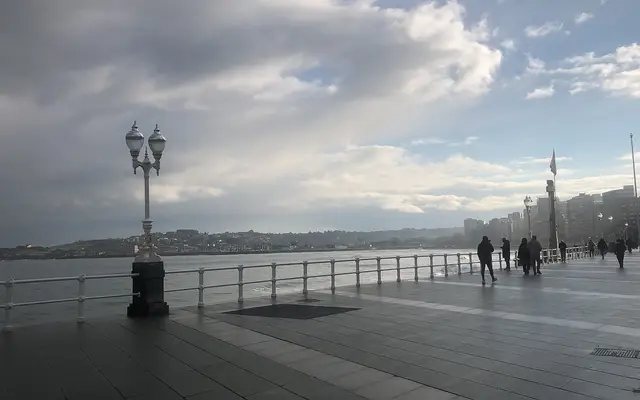
San Lorenzo Beach
Guide to San Lorenzo Beach in Gijón: how the tides work, which stairs to use, where to swim, surfing, dogs in winter and what to see nearby.
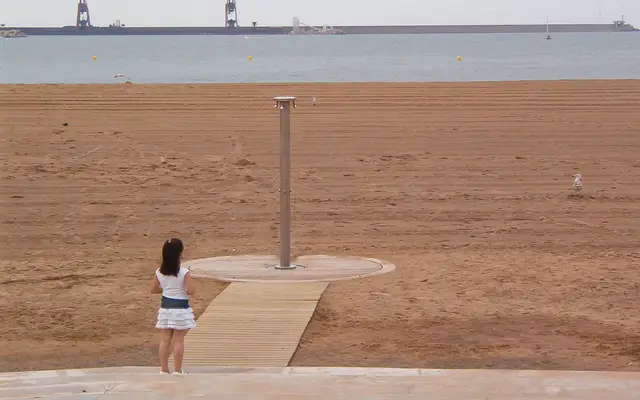
Poniente Beach
Poniente Beach in Gijón: calm water, great for children and the most accessible beach in the city. Facilities, tides, history and what to see nearby.
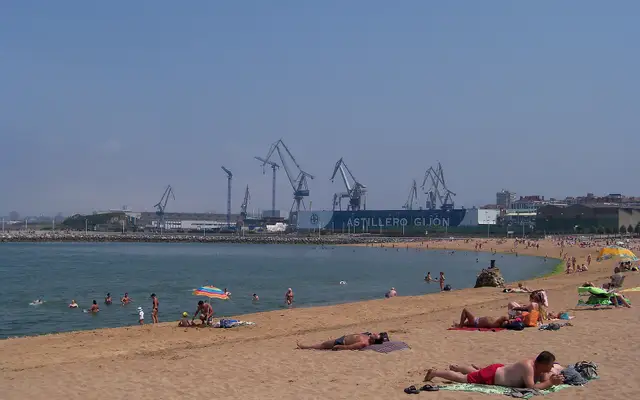
Arbeyal Beach
El Arbeyal, on Gijón's west side: calm water, a neighbourhood feel and fewer crowds. Facilities, tides, how to get there, history and what to see nearby.
Rinconín Beach
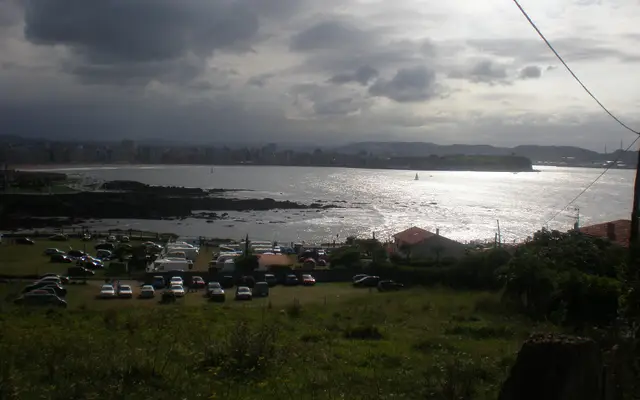
Rinconín (El Cervigón) beach in Gijón: the beach where you can take your dog, what it's like, tides, facilities, rules under review and what to do nearby.

Peñarrubia Beach
Peñarrubia Beach in Gijón: a naturist cove below cliffs in Somió. How to get down, parking, rockfall closures, facilities, dogs and the best time to go.
Frequently asked questions
Which is the best beach in Gijón for families with young children?
Poniente is usually the easiest: gentle waves, a playground on the sand and the Aquarium right next door. El Arbeyal also has calm water and fewer people.
Can I take my dog to the beach in Gijón?
According to Turismo Asturias, the official regional tourist board, El Rinconín is the only beach in Gijón where dogs are allowed all year round. San Lorenzo allows dogs outside the bathing season (1 October to 30 April according to the City Council), between stairs 2 and 8 only. Poniente and El Arbeyal do not allow dogs. Check the current rules on gijon.es before you go.
Is there a nudist beach in Gijón?
Peñarrubia, on the eastern coast, is the beach traditionally used by naturists. It sits below cliffs and you reach it by steps from a small car park.
Is it better to go to San Lorenzo beach at high or low tide?
Low tide, by a long way. The sand stretches out enormously, whereas at high tide the sea comes almost up to the promenade wall. Check a tide table before you head down.
Can you walk between the beaches?
Yes. The three city beaches are linked by the seafront promenade, and a coastal path runs east from El Rinconín past Peñarrubia to La Ñora.
Sources
- Turismo Asturias – Playa de San Lorenzo — 29 October 2026
- Turismo Asturias – Playa de Poniente o de Pando — 29 October 2026
- Turismo Asturias – Playa de L'Arbeyal — 29 October 2026
- Turismo Asturias – Playa del Rinconín o El Cervigón — 29 October 2026
- Turismo Asturias – A day in Gijón with your dog — 29 October 2026
- Turismo Asturias – Serín Beach — 29 October 2026
- Gijón City Council – Recreational areas for pets: parks and beaches — 29 October 2026
- Wikipedia – Anexo: Playas de Asturias — 28 October 2026
- Wikipedia – Playa de Peñarrubia — 29 October 2026
- Wikipedia – Playa de Estaño — 29 October 2026