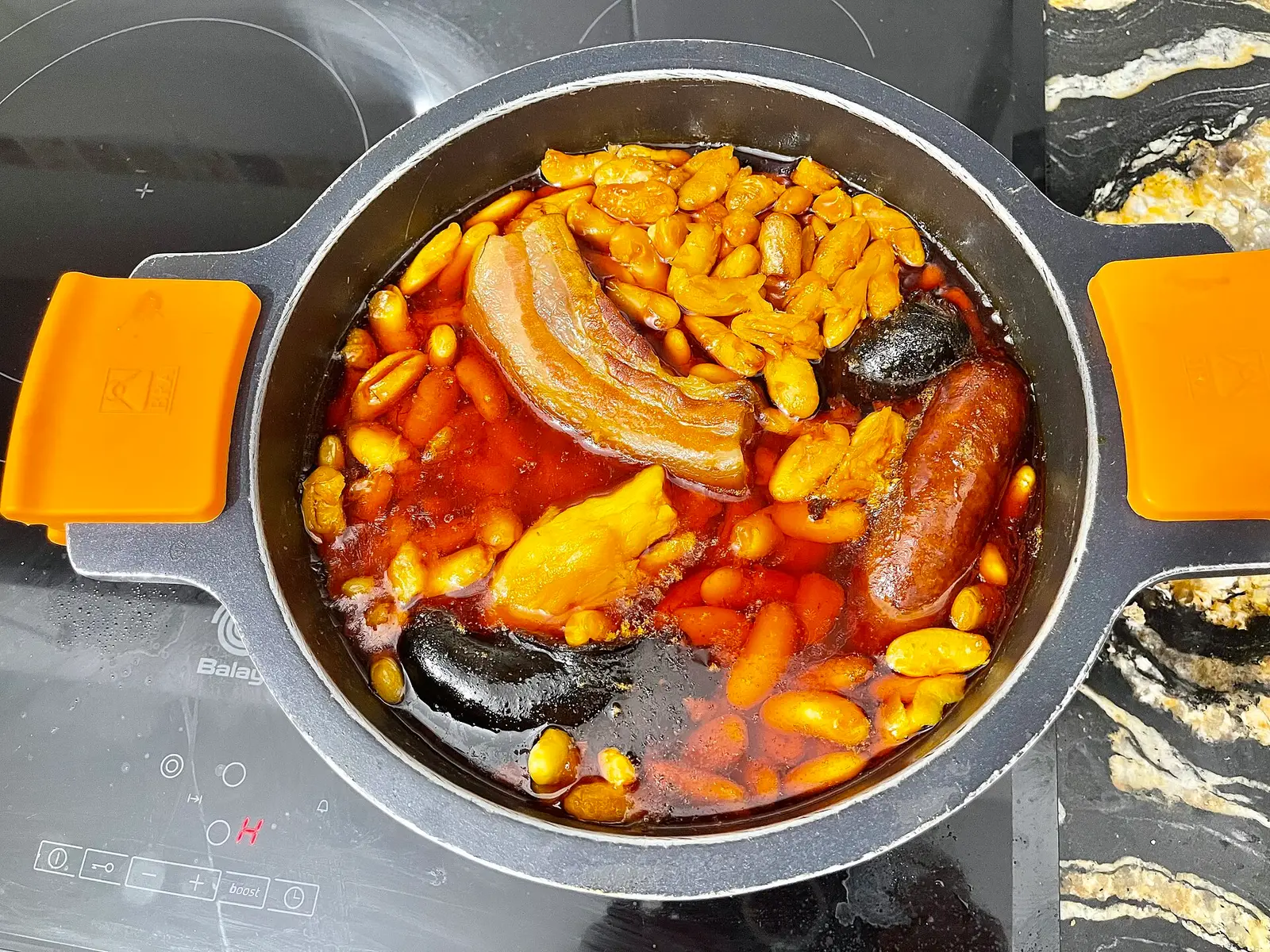
Eating in Gijón (Xixón in Asturian) means eating Asturias by the sea: hearty spoon stews for rainy days, fish landed at the port of El Musel and natural cider poured like nowhere else in the world. This guide tells you what to order, how to order it and when in the day each dish fits, so you don’t end up facing three enormous platters at eleven at night.
The essentials: five dishes not to miss
- Fabada asturiana. Large, buttery white beans (fabes) slow-cooked with the compangu: chorizo, Asturian black pudding, cured pork shoulder and pork belly. It is the region’s signature dish – a lunchtime meal, and a filling one.
- Pote asturiano. Fabada’s winter cousin: beans with cabbage, potato and the same cured meats. Less famous abroad, just as loved locally.
- Cachopo. Two veal fillets sandwiching ham and cheese, breaded and fried. Variations include blue cheese, cured beef or wild mushrooms. Portions are very generous, so share one.
- Chorizo a la sidra. Chorizo simmered in natural cider and served in a clay dish. It is the classic cider-house nibble and the best way to start an informal meal.
- Asturian cheeses. Asturias is one of Europe’s great cheese regions. Try Cabrales (a powerful blue), Gamonéu (lightly smoked), Afuega’l pitu (cone-shaped, sometimes with paprika) and Casín (strong and distinctive). A mixed cheese board is the easiest introduction.
Fish and seafood: food from the port
Gijón is a seafaring city and the menus show it. Look out for:
- Hake (merluza) cooked in cider, battered or simply grilled. “Merluza del pincho” means line-caught hake, the most prized.
- Pixín – the Asturian name for monkfish – fried or stewed.
- Bonito del norte (albacore tuna) in summer, often with tomato or grilled.
- Squid and baby squid, fried or in their own ink.
- Local shellfish: spider crab (centollo), velvet crab (andaricas), winkles, limpets (llámpares) and goose barnacles (percebes), which are pricey but a real delicacy.
- Oricios (sea urchins), a cold-season speciality with its own food festivals along the Asturian coast.
Tip: seafood and seasonal fish are often priced “S/M” (según mercado, market price) or per kilo. Ask before ordering to avoid surprises on the bill.
Meat, sausages and home cooking
- Asturian veal (ternera asturiana) in steaks, cachopos and stews.
- Tortos (fried maize pancakes) topped with picadillo (spiced chorizo mince) or a fried egg – great for sharing.
- Croquetas, which every bar seems to make in its own way.
- Callos (tripe stew) and verdinas (small green beans, often cooked with seafood) in traditional casas de comidas.
Desserts
Asturian puddings deserve their own page. Rice pudding with a caramelised sugar crust is almost compulsory; also try frixuelos (Asturian crêpes), walnut-filled casadielles and apple tart. See our guide to Asturian desserts.
To drink: cider (and a little more)
In Gijón the table drink is natural cider (sidra natural), poured from a height to aerate it. Asturian cider culture was inscribed by UNESCO as Intangible Cultural Heritage of Humanity in December 2024. If it’s your first time, read our guide to cider in Gijón first: it explains how to drink it, what a culín is and how a cider house works.
If you prefer wine, many menus include Cangas wine, from a small wine area in south-western Asturias.
How meals work in Gijón (and Spain)
- Meal times. Lunch is the main meal, roughly 1.30pm–4pm; dinner runs from about 8.30pm to 11pm, later in summer and at weekends. Many kitchens close between services.
- Menú del día. On weekdays many restaurants offer a set lunch with a starter, main, dessert, bread and a drink at a fixed price. It’s the best-value way to eat well.
- Raciones. In cider houses and bars, food is ordered as sharing plates placed in the middle of the table. A media ración is a half portion. For two people, two or three raciones are usually plenty.
- Paying. The bill (la cuenta) is brought when you ask for it – staff won’t rush you out.
- Tipping. Not expected; rounding up or leaving some change is a nice gesture for good service.
- Booking. Reserve at weekends, in August and during the big festivals, especially for dinner.
Tip: Asturian portions are famously large. Order a little to start with – you can always add another dish.
Where to try it
You won’t have to look far: Cimavilla, the city centre and the La Arena district are packed with cider houses and restaurants, while the marina and the seafront promenade have terraces with views. Our guide to where to eat in Gijón explains what kind of places you’ll find in each neighbourhood. And if you’re here in summer, look out for the Natural Cider Festival.
Food to take home
Vacuum-packed Asturian cheeses, dried fabes, cured sausages, tinned Cantabrian fish and bottles of cider (the filtered nueva expresión style travels better) make the best souvenirs. You’ll find them in the city’s food markets, Asturian produce shops and supermarkets.
Food & drink
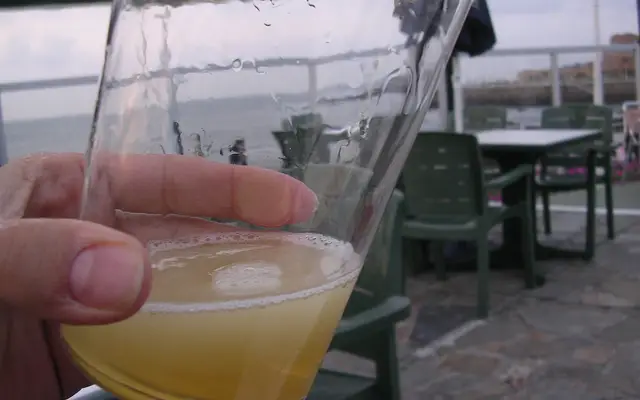
Cider in Gijón: how to drink it and what to expect in a sidrería
What Asturian natural cider is, why it's poured from a height, how to drink it, what to order in a Gijón cider house and what an espicha is.
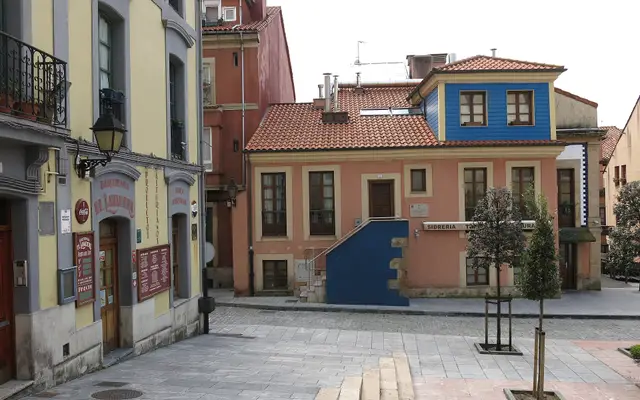
Where to eat in Gijón: the best areas and types of place
Where to eat in Gijón, area by area: Cimavilla, the centre, La Arena, the marina, Somió and the countryside. Types of place, meal times, tipping and tips.
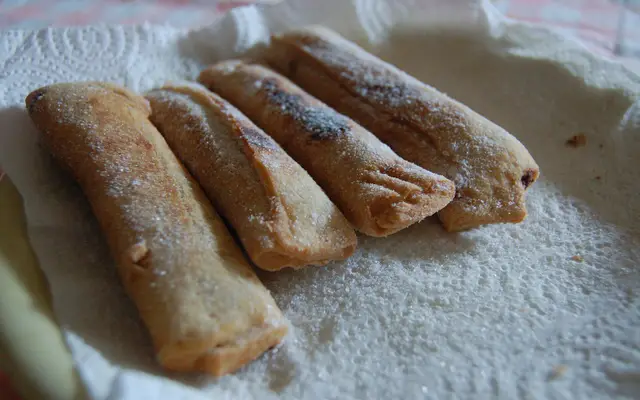
Asturian desserts and sweets to try in Gijón
Caramelised rice pudding, frixuelos, casadielles, carbayones and more: Asturian desserts and sweets, when they're eaten and how to order them in Gijón.

Markets in Gijón: Mercado del Sur, the Sunday Rastro and craft markets
Guide to markets in Gijón: the historic Mercado del Sur food hall, the Sunday Rastro flea market, the monthly craft and organic market, and what to buy.
Frequently asked questions
What is the typical food of Gijón?
Asturian cooking: fabada (bean and pork stew), pote asturiano, cachopo, chorizo cooked in cider and Asturian cheeses, plus plenty of fish and seafood from the Bay of Biscay. All washed down with natural cider.
What time do people eat lunch and dinner in Gijón?
Later than in the UK or US. Lunch is usually served from about 1.30pm to 4pm and dinner from about 8.30pm to 11pm. Many kitchens close in between, although cider houses and bars usually have something to nibble on.
What is cachopo?
Two large veal fillets stuffed with ham and cheese, breaded and fried. It is huge, so one is normally shared between two or three people.
Do you tip in restaurants in Gijón?
Tipping is not expected in Spain and service is included in the price. If you enjoyed the meal, rounding up or leaving a few coins or a small percentage is perfectly fine.
Is Gijón good for vegetarians?
Traditional Asturian dishes are very meat- and fish-heavy (even bean stews contain pork), but cheeses, salads, tortilla, vegetable dishes and desserts are easy to find. Always ask whether a dish contains meat stock or chorizo.
Sources
- Turismo Asturias – Gastronomy — 28 October 2026
- Spanish Ministry of Foreign Affairs – UNESCO inscribes Asturian cider culture as Intangible Cultural Heritage — 28 October 2026