On this page
- How the city is organised
- Centro and Cimavilla
- East district: La Arena, El Coto, Ceares and Viesques
- El Llano
- South district: Pumarín, Contrueces, Montevil and Nuevo Gijón
- West district: La Calzada, El Natahoyo, Jove and Tremañes
- Somió and the countryside
- Which neighbourhood suits you
- For residents and newcomers
Gijón is a compact, very walkable city, but each neighbourhood (barrio) has its own personality: the seafaring feel of Cimavilla, the elegant grid of La Arena by the beach, the working-class life of El Llano and La Calzada, or the green calm of Somió. This guide helps you make sense of them, whether you’re here for a few days and need somewhere to stay or thinking about moving.
How the city is organised
The council divides the municipality into six districts: Centro, Este (East), El Llano, Sur (South), Oeste (West) and Rural. The first five contain the urban neighbourhoods; the Rural district is made up of the countryside parishes, such as Somió, Cabueñes, Deva and Cenero. To get your bearings, picture the city as a fan opening onto the sea: the centre and San Lorenzo beach at the front, the industrial west towards the port of El Musel, the residential east towards Somió, and the newer, denser south.
Centro and Cimavilla
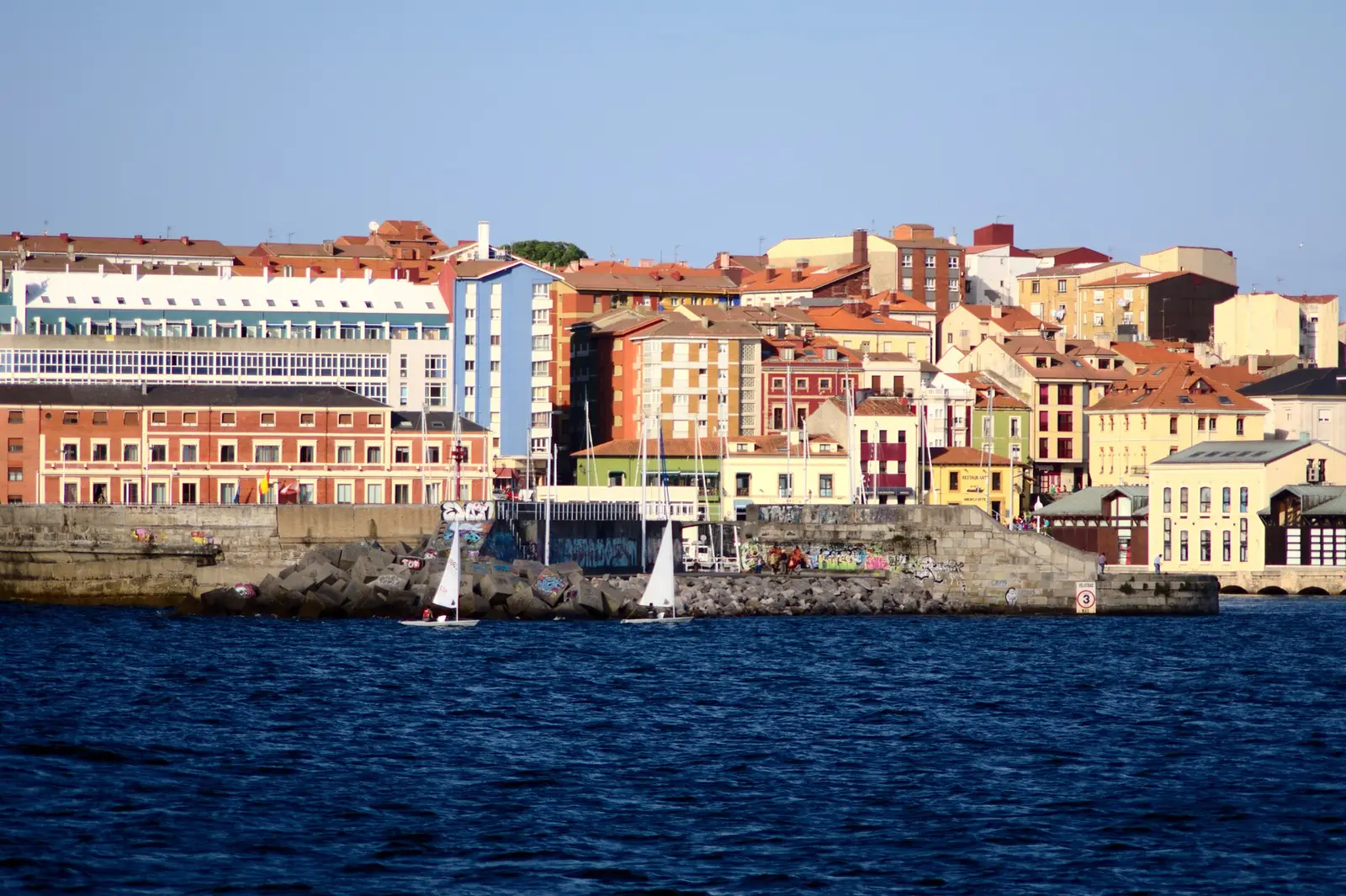
Cimavilla is where Gijón began: the old fishermen’s quarter on the Santa Catalina headland, with narrow streets, Plaza Mayor, the Revillagigedo Palace and, at the top, the Elogio del Horizonte sculpture. It’s the heart of cider-house culture and nightlife, so it’s a charming place to sleep but can be noisy at weekends. Everything about it is in our Cimavilla guide.
The Centro stretches between Cimavilla, the harbour and the beach: shopping streets, Plaza del Seis de Agosto, Paseo de Begoña and Teatro Jovellanos. It’s the best base for a first visit — everything is on foot. Laviada, to the south, is a more residential extension of the centre.
East district: La Arena, El Coto, Ceares and Viesques
La Arena grew out of the 19th-century expansion built over the San Lorenzo dunes. Grid-pattern streets, handsome buildings and the beach one or two blocks away. For visitors it’s probably the best all-rounder: near the beach, the centre and Isabel la Católica Park, with plenty of bars and restaurants.
El Coto and Ceares are established residential areas with local shops and an everyday feel. Further east, El Bibio, Las Mestas and Viesques have more modern housing, big parks and sports facilities; the university campus is in Viesques. A good choice for families or longer stays.
El Llano
El Llano is a district in its own right and one of the city’s most populous neighbourhoods. It grew fast in the mid-20th century as workers arrived from other parts of Spain, and it has kept a down-to-earth character: local shops, old-school bars and busy streets. It’s well connected to the centre on foot or by bus and is usually more affordable.
South district: Pumarín, Contrueces, Montevil and Nuevo Gijón
The south is made up of dense residential areas: Pumarín, Contrueces, Montevil, El Polígono, Perchera-La Braña, Nuevo Gijón, Santa Bárbara, Roces and Nuevo Roces. These are everyday neighbourhoods with schools, health centres and large shops nearby. For visitors they’re a long way from the beach, but for residents they offer bigger flats and good value.
West district: La Calzada, El Natahoyo, Jove and Tremañes
The west is industrial, port-side Gijón. El Natahoyo and La Calzada grew up around shipyards and factories and, since the decline of heavy industry, have been transformed with new parks and facilities. This is where you’ll find Arbeyal beach, the west side’s city beach. Jove and Tremañes stretch towards El Musel and Cape Torres, home of Campa Torres. Rents here are generally lower and the neighbourhood spirit is strong.
Somió and the countryside
Somió is a special case: officially a rural parish, in practice it’s the residential area of detached houses, villas and gardens east of the city, between the coast and the countryside. Very peaceful and ideal if you want nature close to the beach, though you’ll rely on a car or the bus. Nearby are Peñarrubia Beach and the Museum of the Asturian People.
Beyond it, parishes such as Cabueñes — home to Laboral City of Culture and the Atlantic Botanical Garden — Deva and Cenero offer rural houses and countryside stays a few kilometres from the centre.
Which neighbourhood suits you
| If you want… | Try |
|---|---|
| First visit, everything on foot | Centro, La Arena |
| Atmosphere and cider houses | Cimavilla, Centro |
| The beach on your doorstep | La Arena, Centro (San Lorenzo); El Natahoyo (Arbeyal) |
| Quiet but in town | El Coto, Ceares, Viesques |
| Nature and calm | Somió, rural parishes |
| Living on a tighter budget | El Llano, La Calzada, Pumarín, Contrueces |
| Families | Viesques, Montevil, Nuevo Gijón, El Coto |
Tip: if you’re coming by car, ask about parking before booking in the Centro, Cimavilla or La Arena. Street parking there is hard to find; see parking in Gijón.
For residents and newcomers
If you’re moving here, our living in Gijón guide covers paperwork, council offices, libraries and services. To get between neighbourhoods, the city bus network covers the whole city well: see getting around Gijón. And if you’re just visiting, compare options in where to stay in Gijón.
Frequently asked questions
What's the best area to stay in Gijón?
For a first visit, the Centro or La Arena: you're by San Lorenzo beach, close to Cimavilla and within walking distance of everything. If you want somewhere quieter and don't mind the bus, El Coto or Ceares are good alternatives.
How many neighbourhoods does Gijón have?
The city is organised into six districts (Centro, Este, El Llano, Sur, Oeste and Rural), which group together around two dozen urban neighbourhoods plus the rural parishes.
What is Gijón's old town?
Cimavilla, the old fishermen's quarter on the Santa Catalina headland. It's where the city began and today it's the hub for cider houses and nightlife.
Which part of Gijón is quietest?
Somió, with detached houses and lots of greenery, is the quietest, though you'll need a bus or car. Within the city, El Coto, Ceares and Viesques combine calm with good amenities.
Where do families live in Gijón?
Many families choose areas with parks and schools such as El Coto, Viesques, Montevil, Nuevo Gijón or Contrueces, for their larger flats and generally lower prices than the centre.
Sources
- Wikipedia – Distritos de Gijón — 28 October 2026
- Wikipedia – Gijón — 28 October 2026
- Gijón City Council — 28 October 2026