If you want to understand the rural Asturias behind the postcards, this is the place: raised granaries, farmhouses, a cider press, a skittles alley and an entire museum devoted to the bagpipe. Much of the Museo del Pueblo de Asturias is open-air, spread across around 35,000 m² of gardens in Somió, a short walk from Isabel la Católica Park. It works for all ages.
A museum with a past
It was founded in 1968 by Gijón City Council and the local Chamber of Commerce as the Ethnographic Museum of the Asturian People. The idea came from Luis Adaro, and the first director was Luis Argüelles. Since 1985 it has been run by the city’s culture foundation, and in the 1990s it was reorganised into its present form. It belongs to the network of ethnographic museums of Asturias.
What to see
Traditional buildings in the open air
- Hórreos and paneras — Asturian granaries on stone legs (a panera is a larger version) — brought from Veriña and San Andrés de los Tacones. Look at the pegollos (the pillars) and the flat stones on top that stopped rats climbing up.
- Casa de los Valdés, a 17th-century manor house moved from the fishing town of Candás, now home to the Asturias Photo Archive.
- Casa de los González de la Vega, dating from 1757 and brought from Serín, home to the Bagpipe Museum.
- A shepherd’s house from Cangas de Onís, a farmhouse, a mazo (water-powered forge), a cider press and a bolera, the alley for traditional Asturian skittles.
The Bagpipe Museum
Yes, bagpipes — they’re not just Scottish. The gaita is Asturias’ signature instrument, part of the region’s Celtic-flavoured musical tradition, and here you’ll find bagpipes and traditional instruments alongside a sound archive of folk music. It’s one of the museum’s most fascinating sections and a great introduction to Asturian music.
The Asturias pavilion from Expo ’92
The building that represented Asturias at the 1992 Seville World Expo was moved here in 1994 and is used as an exhibition space.
Collections and photo archive
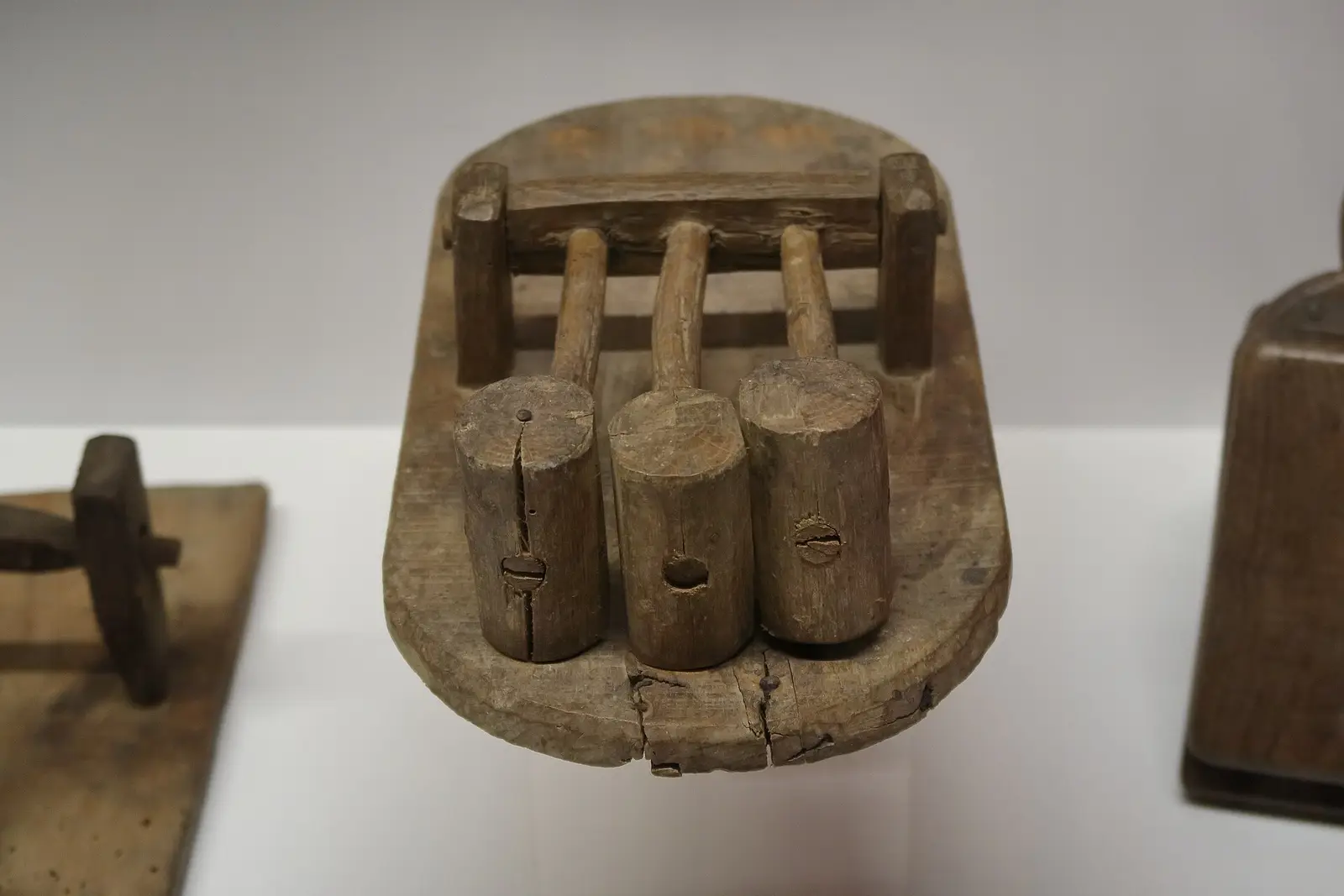
Everyday objects from the 19th and 20th centuries (home life, farming, crafts, music, folk religion) and the Asturias Photo Archive, with images from the mid-19th century to the present.
Tip: much of the visit is outdoors and the grass can be damp. Wear comfortable shoes and, if the sky looks unsettled, bring a waterproof — Asturian showers tend to be short.
Practical information
- Location: Paseo del Doctor Fleming, 877, in Somió, near the river Piles.
- Time needed: an hour and a half to two hours.
- Opening hours and tickets: check the current details on the Gijón City Council museum network website (in Spanish).
- Getting there: on foot from the centre (30–40 minutes via the path along the Piles) or by city bus — see getting around Gijón.
What to combine nearby
- Isabel la Católica Park, with its birds and ponds, on the way from the centre.
- The eastern end of San Lorenzo Beach and El Rinconín, just across the Piles.
- The Atlantic Botanical Garden, also on the east side, for a day devoted to Asturian nature and culture.
- Having seen the cider press, try the drink itself: read our guide to cider in Gijón.
You’ll find the rest of the city’s museums in our guide to museums in Gijón, and more family ideas in Gijón with kids.
Frequently asked questions
What is a hórreo?
The traditional Asturian granary: a wooden store raised on stone pillars to keep grain away from damp and rodents. You'll see them all over the Asturian countryside, and the museum has several moved here from around the municipality.
How long does it take to see the Museum of the Asturian People?
An hour and a half to two hours to explore the open-air site, the houses and the Bagpipe Museum without rushing.
Where is the Bagpipe Museum in Gijón?
Inside the Museum of the Asturian People, in the González de la Vega house, an 18th-century manor moved here from Serín.
Can I walk there from the city centre?
Yes, it's a pleasant walk: cross the river Piles by Isabel la Católica Park and carry on along Paseo del Doctor Fleming. Allow 30–40 minutes from the centre.
Sources
- Wikipedia – Museo del Pueblo de Asturias — 28 October 2026
- Gijón City Council – Museum network — 28 October 2026