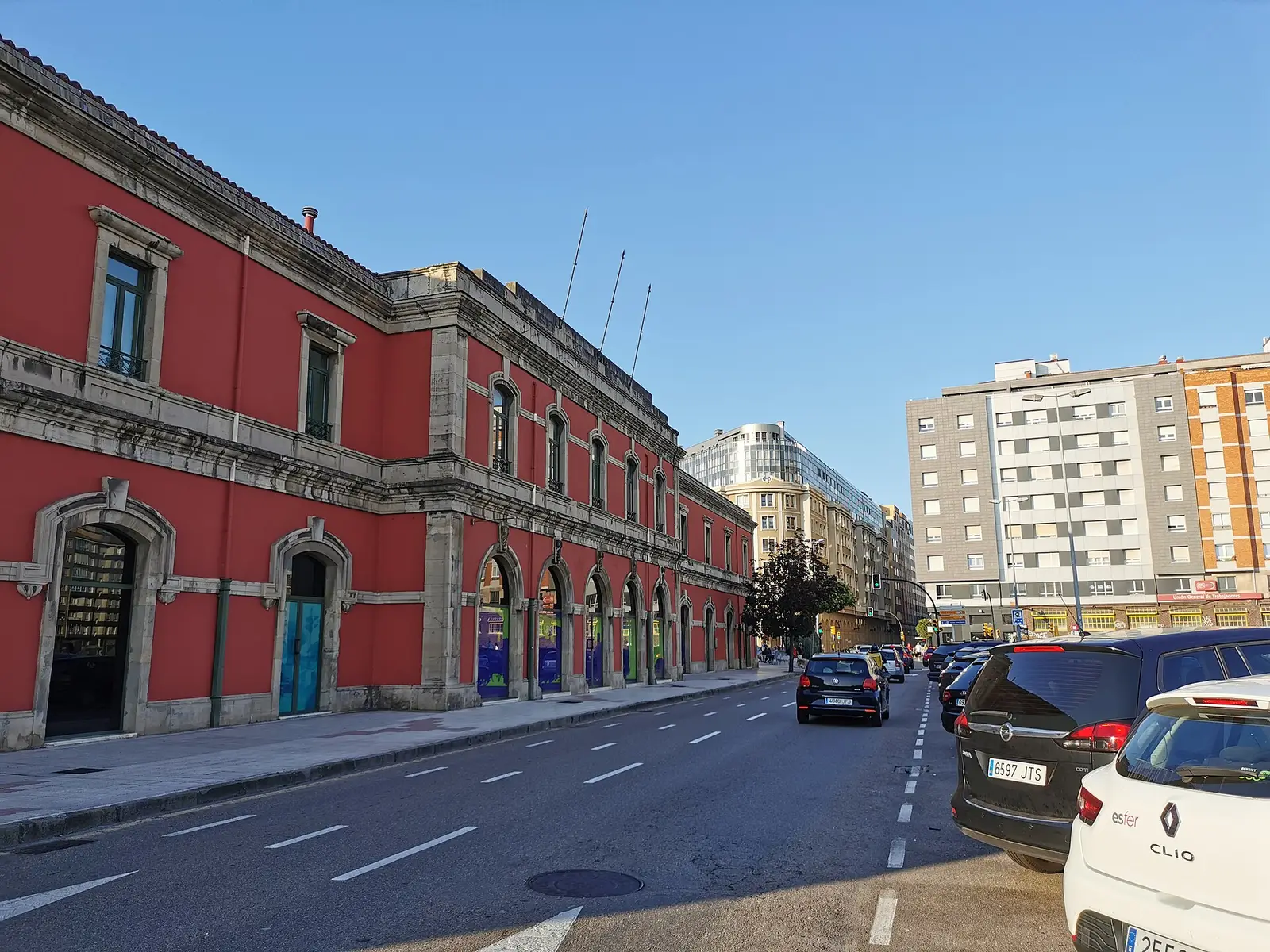
In Gijón’s old Norte station, a stone’s throw from Poniente beach, you’ll find one of the largest and best-preserved railway collections in Europe. Steam engines that hauled coal trains, wooden passenger carriages, trams and mining wagons tell the story of how the railway made industrial Asturias possible. It’s one of the city’s most complete museums and a brilliant choice with children or on a rainy day.
Why it’s special
For more than a century Asturias was a mining and steel-making region, and the railway was the artery linking the coal valleys with the ports of Gijón and Avilés. That’s why lines of several different gauges, run by mining, industrial and state companies, all existed side by side here. The museum brings material from all of them together in one place, which is what makes it unique.
It opened on 22 October 1998 on the site of the Norte station, which the Spanish national railway, Renfe, had closed in 1990. The site covers about 17,000 m² and since 2016 has been an anchor point on the European Route of Industrial Heritage (ERIH).
What to see
- The main hall, with steam locomotives, diesel engines, passenger carriages, wagons and trams, many beautifully restored.
- Star pieces include the Varela de Montes locomotive, built by Richard Hartmann in 1881, which served the Norte company and later Renfe; Santa Bárbara no. 111 (Arnold Jung, 1907); SIA no. 1 (Vulcan Iron Works, 1916); and the FEVE 1059 diesel (Alstom, 1965).
- The old station building, which sets the scene for the railway’s history in Gijón.
- Railway infrastructure tools and equipment, which show the everyday work of the people who kept the lines running.
- Temporary exhibition rooms, a documentation centre with library and archive, and a shop.
Tip: if you love trains, look out for the Jornadas del Vapor (Steam Days). Several times a year the museum fires up historic locomotives — the best chance to see them in motion and hear the whistle.
With children
The museum is great for families: the trains are huge, you can get close to them and the visit doesn’t drag. The museum runs school workshops and family activities on some dates; check the current programme. To round off the day, the Aquarium and Poniente Beach are right next door. More ideas in Gijón with kids.
Practical information
- Location: Plaza de la Estación del Norte, in El Natahoyo, beside Poniente beach.
- Time needed: an hour and a half to two hours.
- Opening hours and tickets: check the current details on the Gijón City Council museum network website (in Spanish) before you go.
- Getting there: on foot from the centre along the marina and Poniente, by bike along the promenade cycle lane, or by city bus — see getting around Gijón.
What to combine nearby
- Poniente Beach, just across the road.
- Gijón Aquarium, a few minutes’ walk away.
- Arbeyal Beach, following the promenade west.
- Cimavilla, across the marina, to finish with a cider.
If the weather lets you down, this museum tops our list for a rainy day in Gijón. To explore the rest of the city’s museums, head back to our guide to museums in Gijón.
Frequently asked questions
Is the Railway Museum in Gijón worth visiting?
Yes, even if you're not a train enthusiast. It's one of Europe's major railway museums and explains how trains and coal transformed Asturias. With children it's a safe bet.
How long do I need for the Railway Museum?
An hour and a half to two hours to see it properly. Allow longer if there's a special event on.
When can I see the steam locomotives running?
Several times a year the museum holds its Jornadas del Vapor (Steam Days), when historic locomotives are fired up. Dates change every year, so check the Gijón City Council website.
Where is the Asturias Railway Museum?
In the old Norte railway station in the El Natahoyo district, beside Poniente beach and a few minutes' walk from the Aquarium.
Sources
- Wikipedia – Museo del Ferrocarril de Asturias — 28 October 2026
- Gijón City Council – Museum network — 28 October 2026