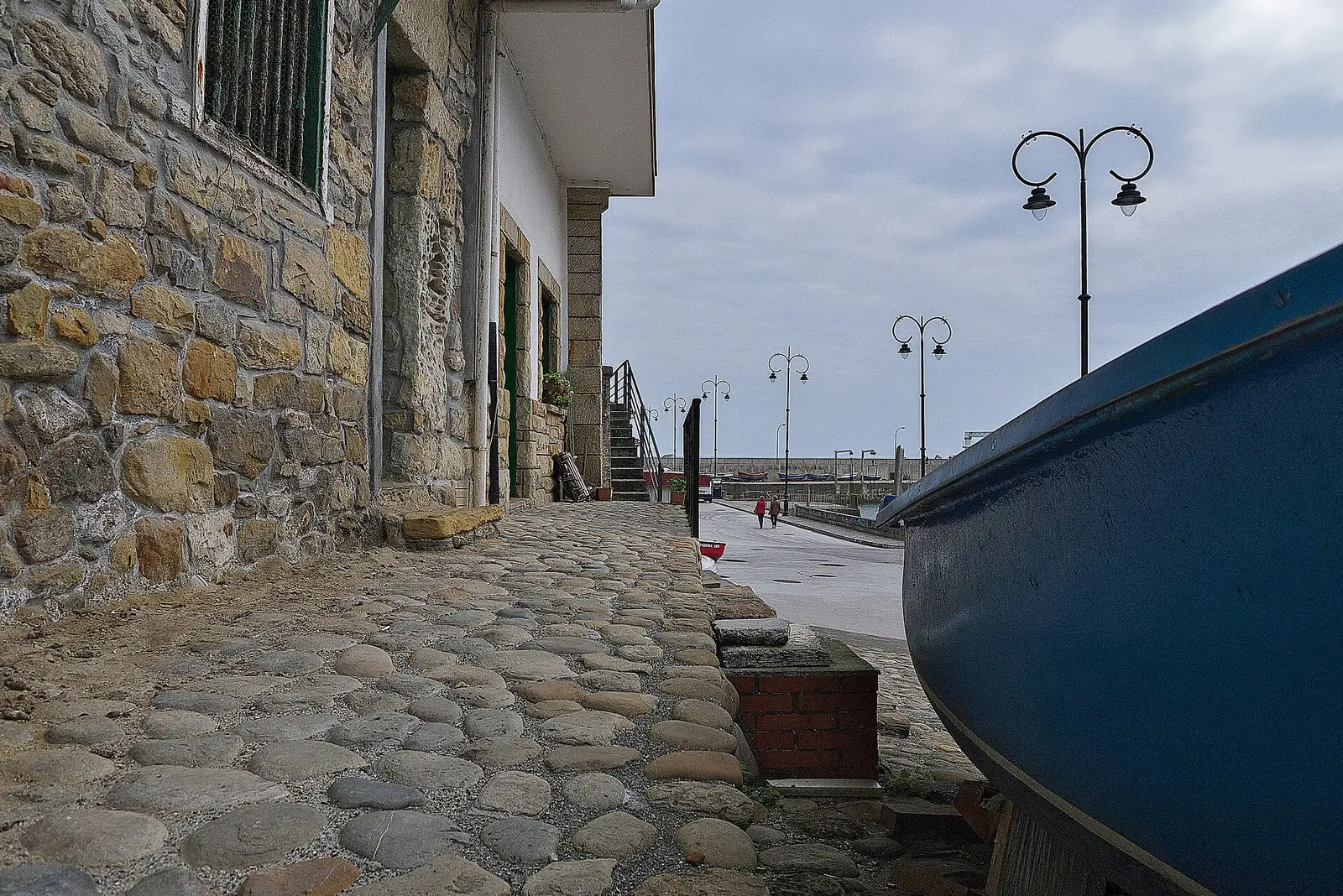
East of Gijón, the Villaviciosa area packs almost everything that makes Asturias special into a few kilometres: apple orchards and cider, a protected estuary full of birdlife, a huge beach at Rodiles, a toy-town fishing harbour at Tazones and one of the finest examples of pre-Romanesque architecture. It makes a rewarding full-day trip, especially by car.
What to see in Villaviciosa
- The old town: arcaded streets, stately houses and the church of Santa María de la Oliva, a 13th-century building straddling the Romanesque and Gothic styles.
- The house where Charles V stayed: according to tradition, the young king spent his first nights on the Iberian Peninsula in Villaviciosa after landing at Tazones in 1517.
- The Villaviciosa estuary (ría): a protected nature reserve of salt marshes and mudflats, important for migrating birds. Paths and hides make it easy to explore.
- Cider culture: this is one of the great apple-growing districts of Asturias. To understand how cider is made and why it is poured from a height, read our guide to cider in Gijón first.
Tazones
A small fishing harbour at the mouth of the estuary, with two clusters of brightly painted houses (one famously decorated with seashells) and a lighthouse on the headland. In 1517 the future Emperor Charles V came ashore here after bad weather blew his fleet off course, and every summer the village marks the event with a historical re-enactment performed by locals. Today it is above all a place to wander and enjoy fish and seafood by the water.
Rodiles beach
On the opposite side of the estuary mouth, Rodiles is a long sandy beach backed by pine woods, popular in summer and with surfers. From here you can watch the estuary open into the sea. If you love beaches, compare it with the city’s own in our guide to Gijón’s beaches.
Valdediós: pre-Romanesque and a monastery
A few minutes’ drive from Villaviciosa, in a peaceful valley:
- San Salvador de Valdediós, nicknamed el Conventín (“the little convent”), an Asturian pre-Romanesque church from the late 9th century. Asturian pre-Romanesque is a style unique to the early medieval Kingdom of Asturias.
- The monastery of Santa María de Valdediós, founded by Cistercian monks in the 13th century.
The surrounding countryside also has several rural Romanesque churches, such as San Juan de Amandi.
Getting there from Gijón
By car: Villaviciosa is a short drive east on the motorway. A car is the best way to combine Tazones, Rodiles and Valdediós in one day, as they lie in different directions.
By bus: regional services run between Gijón and Villaviciosa (timetables on alsa.es). Getting on from Villaviciosa to Tazones, Rodiles or Valdediós by public transport is trickier and very seasonal.
By bike: for fit cyclists, Turismo Asturias publishes a road cycling route between Villaviciosa and Gijón.
A suggested day
- Morning: Valdediós (San Salvador and the monastery), if open.
- Lunch: in Tazones, overlooking the harbour. Spaniards usually eat lunch from around 14:00.
- Afternoon: a walk at Rodiles or along the estuary paths, then Villaviciosa’s old town and a glass of cider to finish.
Tip: if you plan to drink cider, decide who is driving before you set off. The drive back to Gijón is short, but breath tests are common in Asturias and Spain’s limits are strict.
Practical tips
- August: the liveliest month, with the Charles V re-enactment and local fiestas, but also the busiest in Tazones and Rodiles.
- Tides: the estuary looks very different at high and low tide; low tide is better for spotting wading birds.
- Combinations: with time to spare, Lastres and the Jurassic Museum (MUJA) are further east. More ideas in day trips from Gijón, or for a city day, see Oviedo from Gijón.
Frequently asked questions
How do I get from Gijón to Tazones without a car?
The usual way is a regional bus from Gijón to Villaviciosa, then a connection to Tazones, which is limited. In some summers there have been shuttle buses to Tazones and Rodiles, but dates change each year, so check alsa.es or Villaviciosa town council before you go.
What is the Charles V landing festival in Tazones?
Every year in late August, locals in period costume re-enact the first landing in Spain of the young King Charles I (later Emperor Charles V) at Tazones in 1517; the celebrations continue in Villaviciosa the following day. It is a designated Festival of Tourist Interest. Confirm dates on turismoasturias.es.
Can I visit San Salvador de Valdediós?
Usually yes: the pre-Romanesque church of San Salvador (nicknamed 'el Conventín') and the Cistercian monastery of Santa María de Valdediós can normally be visited, but opening times vary by season. Check before you travel.
Why is Villaviciosa linked with cider?
Its area is one of the main apple-growing districts in Asturias, with many cider makers (llagares), which is why it is known as the region's apple capital.
Sources
- Turismo Asturias – Villaviciosa — 28 October 2026
- Turismo Asturias – Tazones — 28 October 2026
- Turismo Asturias – First Landing of Charles V — 28 October 2026
- ALSA – Destinations — 28 October 2026