At a glance
- Where
- El Trabanquín s/n, L'Entregu/El Entrego (San Martín del Rey Aurelio)
- Hours Nov–Feb
- Tue–Sat 10:00–14:00 and 16:00–19:00; Sun 10:00–14:00; closed Mondays
- Hours Mar–Oct
- Tue–Sun 10:00–14:00 and 16:00–19:00; closed Mondays
- Adult ticket
- €9.50 (includes the guided replica-mine tour)
- Time needed
- About two hours, according to Turismo Asturias
The Mining and Industry Museum of Asturias (MUMI), in L’Entregu/El Entrego, explains the industry that shaped much of what you see in Gijón: coal from the inland valleys used to come down by rail to the city’s port, and this is where you learn how it was dug out. The highlight is the mina imagen, a replica mine you enter in a lift cage before riding a small mine train. Almost everything is indoors, which makes it a handy escape when it won’t stop raining on the coast.
Why it’s worth the trip from Gijón
If you’ve already seen the Asturias Railway Museum in Gijón, the MUMI is the other half of the same story: the railway museum has the engines that hauled the coal; El Entrego has the pit, the tools and the working conditions of the miners. Together they give a clear picture of industrial Asturias, a side of the region many visitors never see.
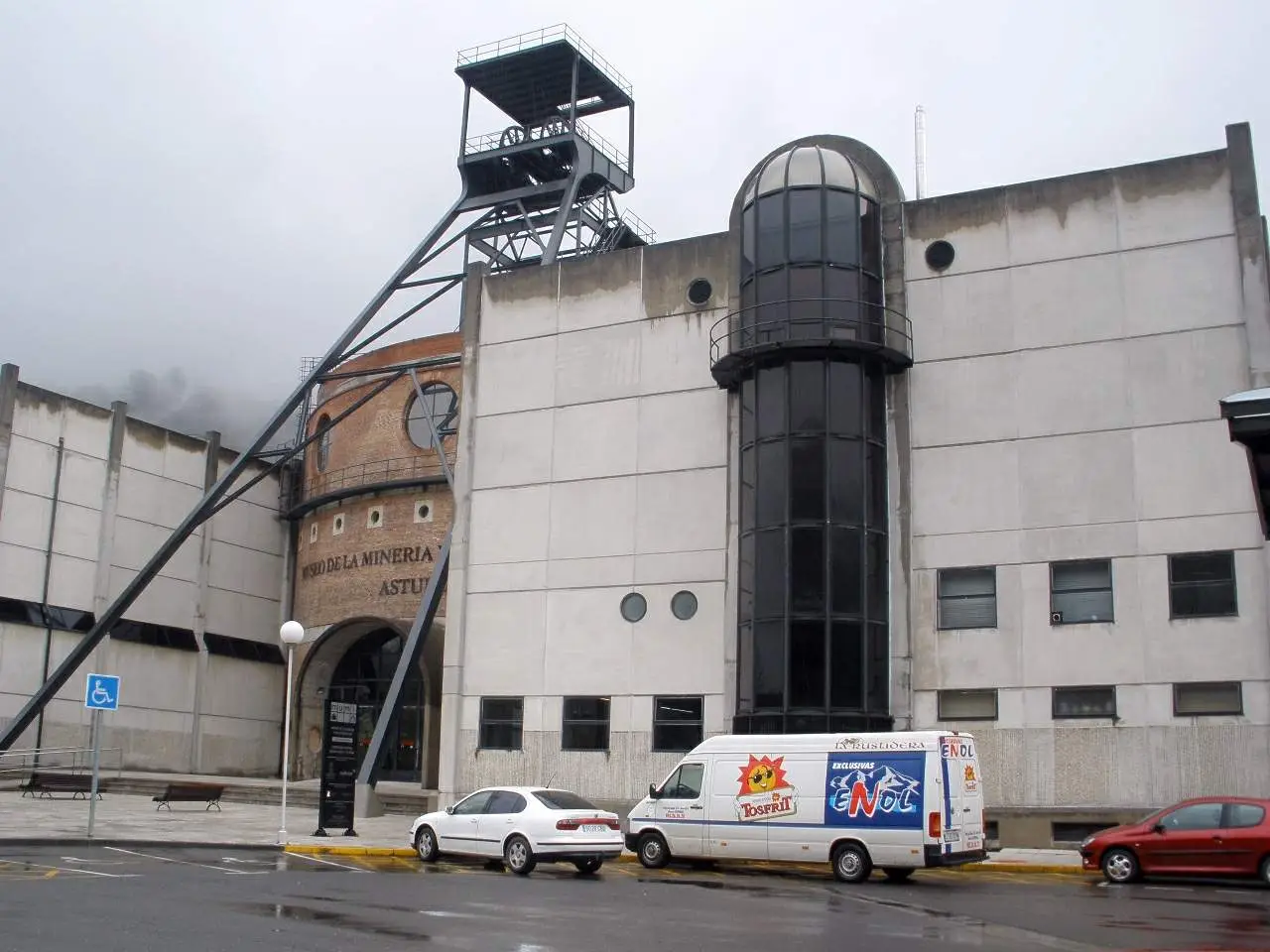
The museum opened in 1994 on the old spoil heap of the San Vicente pit, in the municipality of San Martín del Rey Aurelio, in the Nalón valley. Its cylindrical central building, topped by a pithead frame (castillete), tells you what’s inside before you walk in. According to the museum, in 1926 San Vicente became Spain’s first case of a mine run directly by its workers, through the SOMA miners’ union, until 1937; mining carried on until 1970. The pit itself is not open to visitors yet, though the museum says it is working on it.
What to see
- The replica mine (mina imagen). A faithful reconstruction of a real gallery with more than 1,000 metres of tunnels, according to the museum. You go in through the cage, which simulates the descent, and follow the changes in mining techniques and machinery from the 19th century to today. It’s always guided, includes a short ride on a mine train and lasts about 45 minutes. If you don’t speak Spanish, ask at the desk what language support is available.
- The permanent exhibition. Tools, machinery, minerals, photographs and reconstructions such as a laboratory and a mine infirmary. Turismo Asturias also highlights the sections on explosives, mine rescue teams and the Industrial Revolution.
- Outside. The gardens around the museum are free and don’t need a ticket.
Tip: according to Turismo Asturias, individual visitors are grouped together for the mine, and the start time depends on how many people turn up. Leave yourself some slack, especially in the afternoon, rather than arriving just before closing.
Opening hours and tickets (checked 4 November 2026)
From the official MUMI website:
- November to February: Tuesday to Saturday 10:00–14:00 and 16:00–19:00; Sundays mornings only (10:00–14:00).
- March to October: Tuesday to Sunday 10:00–14:00 and 16:00–19:00.
- Closed every Monday, on 1 and 6 January, 25 December and the afternoons of 24 and 31 December.
Note the long midday break: like many places in Spain, the museum closes between 14:00 and 16:00.
Prices: adults €9.50; over-65s and disabled visitors €6.50; children aged 4–12 and members of large families €6; holders of the Carné Joven youth card or the Principality’s Club Cultura card €8.50; groups of 15 or more €5.50. Under-4s free. You’ll need to show proof to get a discount.
Tickets are sold at the museum’s front desk or by email (reservas@mumi.es); online sales are listed as “in development”. The museum has also announced that from January 2027 the permanent exhibition will be free on Wednesdays.
Tip: in winter the museum is closed on Sunday afternoons. If Sunday is your only free day between November and February, plan to be there in the morning.
Getting there from Gijón
By car: the AS-1, known as the Autovía Minera (“mining motorway”), links Gijón with the mining valleys, and Wikipedia lists it, along with the A-66, as the road access to the museum. The MUMI has its own free car park for cars and coaches, with reserved spaces for disabled visitors, according to its website.
By train: according to Wikipedia, there is a local-train (Cercanías) stop at San Vicente next to the museum, and El Entrego also has a station. We couldn’t confirm from an official source which line to take from Gijón or whether you need to change trains, so plan the route and check times on Renfe Cercanías Asturias before you set off, including the last train back.
What else to see in the Nalón valley
The MUMI sits in the middle of the Nalón coalfield, with more industrial heritage a short distance away. Turismo Asturias includes it in a route through the Nalón valley:
- The Sotón pit, a few metres from the museum, listed as a Bien de Interés Cultural (a protected heritage site).
- The Valle de Samuño Mining Ecomuseum, at El Cadavíu (Ciañu, Langreo). A mine train runs up the Samuño valley, through the Emilia tunnel, a 19th-century gallery used to bring out coal, to the San Luis pit, sunk deeper between 1928 and 1930, worked until 1969 and protected as a heritage site since 2013. Days and times change with the season, so check its Turismo Asturias page before relying on it, especially outside summer.
- The Asturias Steel Museum (MUSI), in La Felguera (Langreo), inside a 45-metre former cooling tower of the Duro Felguera steelworks. Check its official listing to see whether it’s open and when.
- El Entrego’s mining neighbourhoods, such as La Vega, San Juan, Santa Bárbara and El Coto, with their rows of workers’ housing.
Tip: the MUMI plus one more visit makes a full day. If you leave Gijón early, do the museum in the morning so the 14:00–16:00 closure doesn’t catch you halfway through.
With children, in the rain or with reduced mobility
- With children: the cage descent and the mine train tend to be the big hits. More ideas in Gijón with kids.
- In the rain: the museum and mine are indoors, so this is a good out-of-town alternative to the ideas in our rainy day in Gijón guide. If you’d rather stay in the city, see Gijón’s museums.
- Accessibility: the museum has ramps, a lift to all three floors, adapted toilets and free wheelchair loan. The exhibition is accessible apart from the mezzanine, and the replica mine is only partly adapted. Ask staff for help, or phone ahead on +34 985 66 31 33.
For another easy indoor trip from Gijón, Oviedo works just as well in bad weather. All our other ideas are in day trips from Gijón.
Frequently asked questions
How much does the Mining Museum of Asturias cost?
According to the MUMI website, checked in November 2026, an adult ticket costs €9.50; over-65s and disabled visitors pay €6.50; children aged 4 to 12 and members of large families pay €6. Under-4s go free. The ticket includes the guided tour of the replica mine.
Is the MUMI ever free?
The museum says that from January 2027 the permanent exhibition will be free for everyone on Wednesdays. Until then normal prices apply. The gardens around the museum are free to wander at any time.
Do I need to book the mine tour?
Not as an individual visitor. According to Turismo Asturias, the museum puts visitors together into groups to go down the mine, and the start time depends on how many people are there. Groups of more than 15 must book by email (reservas@mumi.es). Online ticket sales are listed as 'in development', so for now you buy tickets at the desk.
How long does a visit take?
Turismo Asturias suggests allowing about two hours. The replica mine tour takes roughly 45 minutes of that, according to the museum.
Is the MUMI wheelchair accessible?
Mostly. There are ramps, a lift serving all three floors, adapted toilets, reserved parking and free wheelchair loan. The exhibition is accessible except for the mezzanine, and the replica mine is only partly adapted.
Sources
- MUMI – Plan your visit (hours, prices, parking) — 4 November 2026
- MUMI – Contact and opening hours — 4 November 2026
- MUMI – Mina imagen (replica mine) — 4 November 2026
- MUMI – Accessibility — 4 November 2026
- MUMI – San Vicente pit — 4 November 2026
- Turismo Asturias – The Mining and Industry Museum (MUMI) — 4 November 2026
- Turismo Asturias – Valle de Samuño Mining Ecomuseum — 4 November 2026
- Turismo Asturias – Asturias Steel Museum (MUSI) — 4 November 2026
- Turismo Asturias – The heart of mining (Nalón valley route) — 4 November 2026
- Wikipedia (Spanish) – Museo de la Minería y de la Industria de Asturias — 4 November 2026
- Renfe – Cercanías Asturias — 4 November 2026