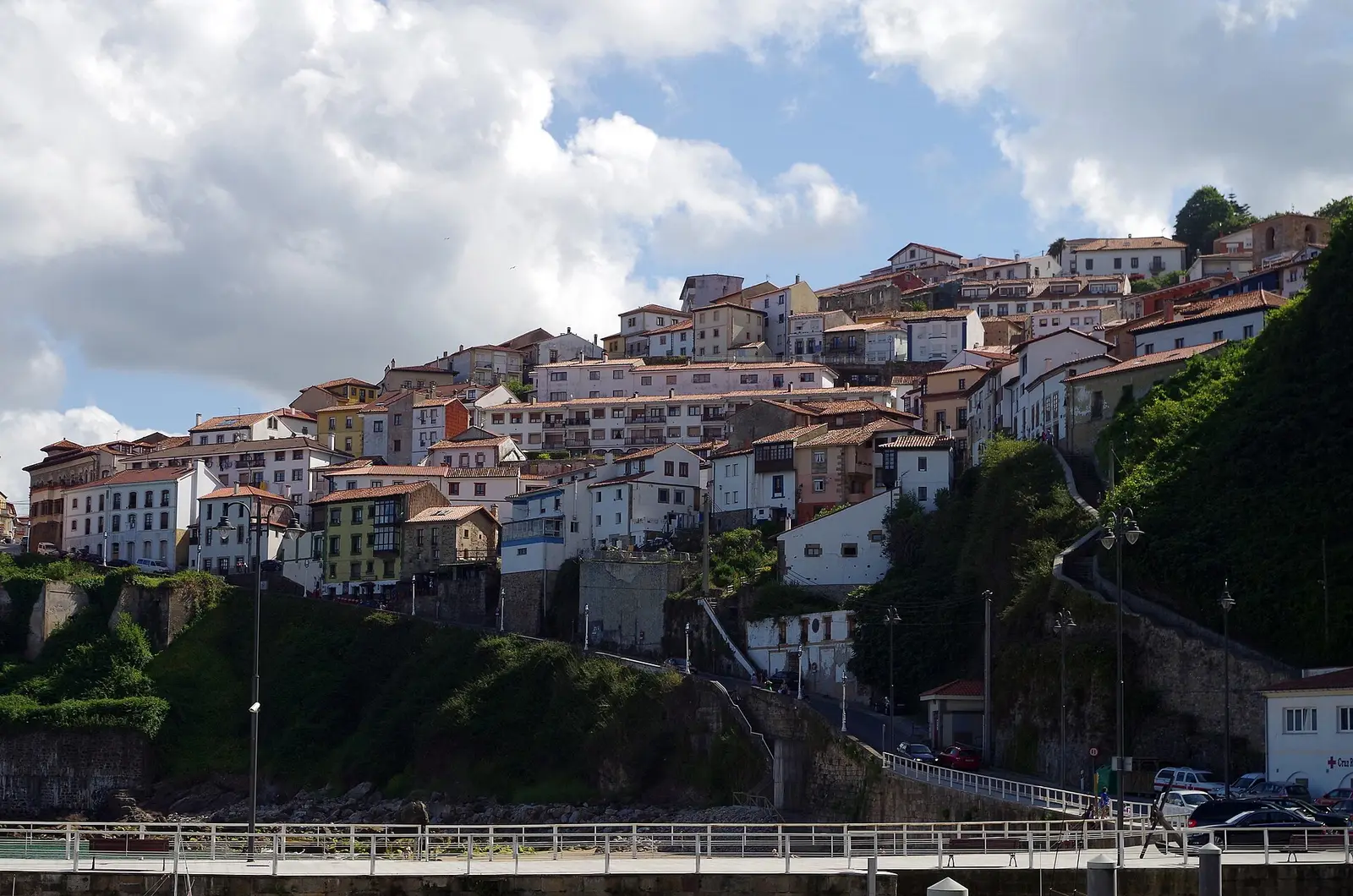
Lastres (Llastres in Asturian) and the Jurassic Museum of Asturias (MUJA) make one of the most rewarding day trips from Gijón/Xixón: real dinosaur fossils in the morning at a museum overlooking the sea, then an afternoon in a fishing village clinging to the cliffs above the Bay of Biscay. They are only a few kilometres apart in the municipality of Colunga, so they fit neatly into one day, especially if you’re travelling with children.
Getting there from Gijón
By car: the easiest option. Take the A-8 motorway east and leave at exit 337 (Colunga). From Colunga, the AS-257 road towards Lastres passes the museum at kilometre 1.5, on the coastal plateau known as the Rasa de San Telmo. From Gijón allow a little over half an hour, traffic permitting.
By bus: ALSA runs services along the eastern coast. According to the museum, the nearest regular stop is about 1.5 km away, between Colunga and Lastres, so expect a walk. Check timetables and stops on alsa.es before you go; without a car this is a slower trip.
The Jurassic Museum of Asturias (MUJA)
The MUJA sits on the Rasa de San Telmo between Colunga and Lastres, in a building shaped like a giant dinosaur footprint, with superb views of the coast. Its great treasure is one of the world’s finest collections of dinosaur footprints, many of them found on the cliffs and beaches of this stretch of shoreline, known as the Dinosaur Coast.
Inside there’s a permanent exhibition on the history of life on Earth and the Jurassic period, full-size skeleton replicas, an immersive room and multimedia displays. Outside, the MUJA garden has a play area and dinosaur figures, ideal for letting younger children run off some energy. Most labels are in Spanish, so older children who read English may want a quick briefing from you.
Opening hours (checked October 2026)
According to the official website:
- February and 1 November–31 December: Wednesday to Friday 10:00–14:30; weekends and the opening holidays (7 and 8 December) 10:30–18:00. Closed Mondays and Tuesdays, and on 24, 25 and 31 December.
- March–June and September–October: Wednesday to Friday 10:00–17:00; weekends and opening holidays 10:30–18:30.
- July and August: daily 10:30–19:00.
- January: closed all month.
- Last entry one hour before closing.
Prices
Standard ticket €7.21; reduced €4.75 (children aged 4–11, over-65s, large families and other groups). Free for under-4s and for everyone on Wednesdays. Tickets must be bought online. Check prices and discounts before you go, as they can change.
Tip: on a Wednesday out of season, entry is free and the museum opens in the morning. Pair it with lunch in Lastres and an afternoon stroll.
What to see in Lastres
Lastres was named an Exemplary Village of Asturias (Pueblo Ejemplar) in 2010 by the Princess of Asturias Foundation, an annual award for villages that preserve their heritage and community spirit, and it is on the list of Spain’s most beautiful villages. Its houses tumble down a very steep slope to a small working fishing harbour.
- The harbour and old village: steep lanes, stone mansions, hórreos (the raised wooden granaries typical of Asturias) and balconies with sea views.
- Santa María de Sábada church, in the Baroque style, and the clock tower, in the upper village.
- San Roque chapel and its viewpoint: right at the top, with a panoramic view of the village, the coast and, on clear days, the Picos de Europa mountains.
- The Doctor Mateo set: the popular Spanish TV series was filmed here.
Beaches and dinosaur footprints
Close by are the beaches of La Griega, La Isla and La Espasa, long-standing summer favourites. At La Griega you can see dinosaur footprints in the rocks, best at low tide. Between La Isla and Lastres there’s also a lovely stretch of coastal path. Compare them with the city’s own sands in our guide to Gijón’s beaches.
How much time, and practical tips
- Full day: museum in the morning, lunch in Lastres (Spanish lunch typically runs from about 13:30 to 15:30), then the village or a beach in the afternoon.
- Footwear: Lastres is all hills; wear comfortable shoes.
- Parking: the village fills up in summer, so park in the upper part and walk down.
- Rainy day: the MUJA is a great indoor option. More ideas in rainy day in Gijón and Gijón with kids.
- Combine it: Villaviciosa and Tazones are on the way, and further east you reach Llanes and Ribadesella. See all options in day trips from Gijón.
Frequently asked questions
How much does the Jurassic Museum of Asturias cost?
According to the official website, checked in October 2026, a standard ticket costs €7.21 and a reduced ticket €4.75 (children aged 4 to 11, over-65s, large families and others). Children under 4 go free, and entry is free for everyone on Wednesdays. Tickets must be bought online.
Which day is the MUJA free?
Entry is free on Wednesdays, although you still need to book a ticket online. Bear in mind the museum is closed on Mondays and Tuesdays outside July and August, and for the whole of January.
How long do I need at the Jurassic Museum?
Allow two to three hours for the museum and garden, a bit longer with small children who want to use the outdoor play area. Lastres itself deserves another two or three unhurried hours.
Where can I see dinosaur footprints near Lastres?
The coast between Gijón and Ribadesella is known as the Dinosaur Coast because fossil footprints (ichnites) appear in its cliffs and on its beaches. One of the best-known spots is La Griega beach in Colunga. Always check the tide times and keep away from the foot of the cliffs.
Where was the TV series Doctor Mateo filmed?
The Spanish TV series Doctor Mateo was filmed in Lastres, which was called San Martín del Sella in the show. Many Spanish visitors come to spot its streets and harbour.
Sources
- Jurassic Museum of Asturias – Opening hours — 28 October 2026
- Jurassic Museum of Asturias – Prices — 28 October 2026
- Jurassic Museum of Asturias – How to get there — 28 October 2026
- Turismo Asturias – Lastres fishing village — 28 October 2026
- ALSA — 28 October 2026