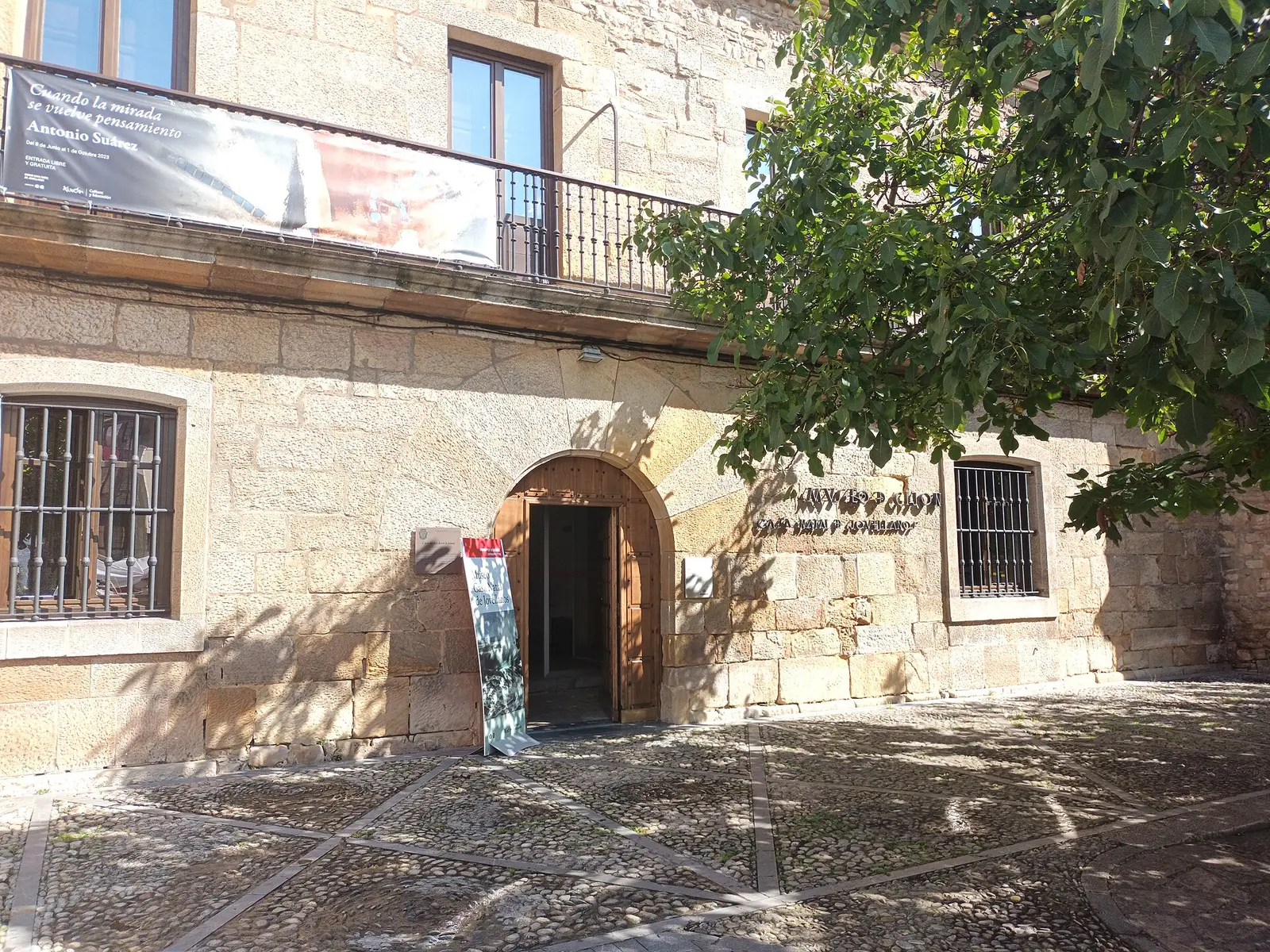
At the top of Cimavilla, on the square that bears his name, stands the house where Gaspar Melchor de Jovellanos — Gijón’s most famous son — was born in 1744. Today it’s a city museum that does two jobs at once: it keeps the memory of this great Enlightenment thinker alive and it houses the city’s art collection, with Asturian and European painting and one piece nobody should miss, the Retablo del Mar. It’s a calm, rewarding stop on a walk around the old quarter.
The house and its history
The house was built in the late 15th century by Juan García de Jove, an ancestor of the family, and remodelled in the 16th century and again in 1758 by Jovellanos’ father, who gave it its present look: a central block between two side towers and, attached to it, the chapel of Los Remedios, where Jovellanos is buried. The building is a Bien de Interés Cultural (Spain’s top heritage listing) and opened as a museum on 6 August 1971. It’s also home to the Foro Jovellanos and a library devoted to his life and work.
Who was Jovellanos?
If the name is new to you, think of him as Spain’s answer to the great 18th-century reformers. Jovellanos was a jurist, writer, economist and government minister, and one of the leading minds of the Spanish Enlightenment. He believed practical education was the key to progress, and in 1794 he founded the Royal Asturian Institute of Nautical Studies and Mineralogy in Gijón to train sailors and mining engineers. You’ll see his name everywhere in the city — streets, squares, schools and a statue on Plaza del Seis de Agosto. He died in 1811 in Puerto de Vega, on the western Asturian coast.
What to see
- The Retablo del Mar (Altarpiece of the Sea) by Sebastián Miranda. A large painted wooden carving recreating a fish auction in Cimavilla’s old fish market: fishwives and porters below, buyers above. The original was lost in the Spanish Civil War and the sculptor remade it for the museum. It’s pure seafaring Gijón.
- 19th- and 20th-century Asturian painting, with artists such as Nicanor Piñole and Evaristo Valle.
- 17th- and 18th-century European schools, especially Flemish and Dutch.
- Notable donations, such as that of Carmen and Severo Ochoa (the Nobel Prize-winning scientist), which includes works by Dalí, Goya prints and pre-Columbian pieces.
- Rooms devoted to Jovellanos and the chapel of Los Remedios.
Tip: the birthplace is a few minutes’ walk from the Roman Baths. Do both visits back to back and finish by climbing the Santa Catalina headland.
Practical information
- Location: Plaza de Jovellanos, in Cimavilla.
- Time needed: about an hour.
- Opening hours and tickets: check the current details on the Gijón City Council museum network website (in Spanish). Guided tours usually need to be booked in advance.
- Getting there: on foot from the centre. Cimavilla is hilly with narrow streets; if you’re driving, read parking in Gijón first.
What to combine nearby
- The Roman Baths of Campo Valdés, at the foot of the old quarter.
- A full walk round Cimavilla, with Plaza Mayor and the Revillagigedo Palace.
- The Elogio del Horizonte, on top of the Santa Catalina headland.
- The city’s statues and sculptures, including Jovellanos himself, in our guide to monuments and sculptures.
More museums to round off your visit in our guide to museums in Gijón.
Frequently asked questions
Who was Jovellanos?
Gaspar Melchor de Jovellanos (Gijón 1744 – Puerto de Vega 1811) was a writer, jurist and statesman, one of the leading figures of the Spanish Enlightenment. In Gijón he founded the Royal Asturian Institute of Nautical Studies and Mineralogy, and he's the city's most celebrated son.
Where is Jovellanos buried?
In the chapel of Los Remedios, attached to the house where he was born, on Plaza de Jovellanos in Cimavilla.
What is the Retablo del Mar?
A large carved and painted wooden piece by the sculptor Sebastián Miranda, showing a fish auction in Cimavilla's old fish market, complete with fishwives and buyers. It's one of the museum's best-loved works.
Is the Jovellanos museum free?
It has traditionally been free to enter, but conditions can change. Check current prices and opening hours on the Gijón City Council museum network website.
Sources
- Wikipedia – Museo Casa Natal de Jovellanos — 28 October 2026
- Wikipedia – Gaspar Melchor de Jovellanos — 28 October 2026
- Gijón City Council – Museum network — 28 October 2026