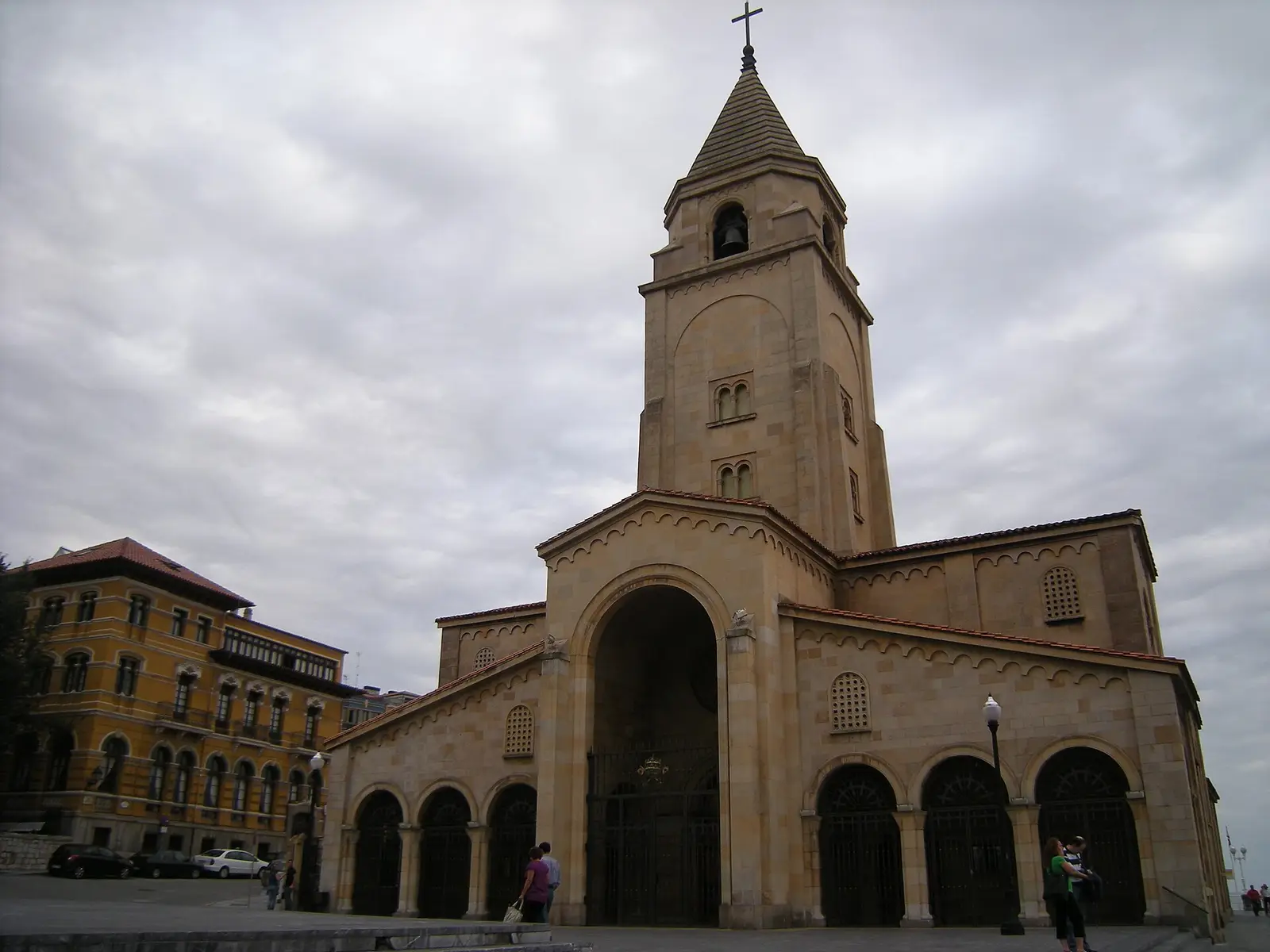
The Camino del Norte (Northern Way), known in Asturias as the Camino de la Costa (Coastal Way), runs right across Gijón. For many pilgrims it’s the first big city after days of villages, cliffs and meadows – a perfect stop to rest, do some laundry and eat well. Here’s how the Camino reaches the city, the route it takes through it and how it leaves for Avilés.
The Camino del Norte in Asturias
The Camino del Norte runs from Irun, on the French border, to Santiago de Compostela, following Spain’s northern coast. Since 2015 it has formed part, together with other northern routes, of the UNESCO World Heritage Site “Routes of Santiago de Compostela: Camino Francés and Routes of Northern Spain”.
According to Turismo Asturias, the Asturian section of the Coastal Way is split into 13 stages covering about 282 km. It enters Asturias at the Tina Mayor estuary near Bustio and leaves across the Eo estuary into Galicia. Gijón lies roughly a third of the way along.
| Stage (Turismo Asturias) | Distance |
|---|---|
| 4. Priesca – Casquita | 13.0 km |
| 5. Casquita – Gijón/Xixón | 25.6 km |
| 6. Gijón/Xixón – Avilés | 26.2 km |
| 7. Avilés – Muros de Nalón | 21.2 km |
Distances vary depending on the variant you follow and the source; other materials put the Villaviciosa–Gijón stage at around 28 km.
The Casquita fork: Norte or Primitivo
Shortly before Gijón, near Villaviciosa, pilgrims face a choice. At Casquita the route divides: the Camino Primitivo (the “Original Way”) heads south past the monastery of Valdediós to Oviedo and continues inland, while the Coastal Way carries on to Gijón. For the area around that stage, see our guide to Villaviciosa and Tazones.
Arriving in Gijón: from Deva to Cimavilla
After leaving the Villaviciosa area and crossing the ridge between the two municipalities, the Camino drops down to Deva, already within Gijón, with its recreation area among meadows and woodland. It continues towards Cabueñes, passes the vast Universidad Laboral – today Laboral City of Culture – and enters the city at La Guía.
In town, the route crosses Avenida de la Costa and Paseo de Begoña in the heart of the centre and heads into Cimavilla, the old quarter. It’s a good moment to drop your rucksack and climb Santa Catalina hill to the Elogio del Horizonte sculpture, or visit the church of San Pedro overlooking San Lorenzo beach.
Leaving Gijón for Avilés: Monte Areo
Stage 6 leaves Cimavilla heading west through El Natahoyo and La Calzada, historically industrial and port-side districts. Leaving the city, the Camino takes the branch towards Puao, passes the old sugar factory at Veriña and starts the climb up Monte Areo, the main effort of the day. The hill is home to an important group of prehistoric burial mounds.
From there it descends to Santolaya and its church, passes La Maquila and La Torre to reach Tamón, in the municipality of Carreño, and continues to Tabaza, where it joins the N-632 road towards Trasona and finally Avilés, which has a pilgrim hostel.
Tip: the way out of Gijón crosses industrial areas and stretches of road. Set off early, wear something visible and carry water – there are few services before Monte Areo.
Where to stay and pilgrim services
Gijón has every kind of accommodation, from hostels and guesthouses to hotels. For pilgrims the most practical choice is to sleep in the centre or Cimavilla, right on the route. Check hostel availability in advance, especially in summer. See the areas in where to stay in Gijón.
The city has everything you need for a rest day: pharmacies, outdoor-gear shops, launderettes, health centres and transport. If you need to skip a stage or head home, getting to Gijón covers trains, coaches and the airport.
The credential and the Compostela
- The credential (credencial) is the pilgrim passport. Collect stamps at hostels, accommodation, parish churches and tourist offices.
- To receive the Compostela in Santiago you must cover at least the last 100 km on foot or horseback, or 200 km by bike, stamping your credential along the way.
- If you start in Gijón, all of western Asturias and Galicia lies ahead: a long but spectacular Camino.
Official information
- Turismo Asturias – Coastal Way: stages, elevation profiles and accommodation.
- Gijón City Council – Camino de Santiago: municipal information for pilgrims.
Frequently asked questions
Does the Camino de Santiago pass through Gijón?
Yes. The Camino del Norte – known in Asturias as the Camino de la Costa, or Coastal Way – crosses Gijón from east to west. The city is the end of the stage from Casquita (Villaviciosa) and the start of the stage to Avilés.
How far is it from Gijón to Avilés on the Camino?
Turismo Asturias gives 26.2 km for the Gijón–Avilés stage, with the climb up Monte Areo as the main challenge. Other sources give slightly different figures depending on the variant.
Where can I get my pilgrim passport stamped in Gijón?
Usually at hostels, hotels, parish churches and tourist offices. Get a stamp wherever you sleep, and pick up another at a church or the city's tourist office.
Can I start the Camino in Gijón?
Yes – it's a good starting point thanks to its transport links. To earn the Compostela certificate you must cover at least the last 100 km on foot (200 km by bike) and collect stamps along the way.
Where do the Camino del Norte and the Camino Primitivo split?
Near Villaviciosa, at Casquita. From there the Camino Primitivo heads towards Oviedo, while the Coastal Way continues to Gijón.
Sources
- Turismo Asturias – The Coastal Way through Asturias — 28 October 2026
- Turismo Asturias – Stage 6: Gijón/Xixón – Avilés — 28 October 2026